Author: dayron@rodriguezcleanpro.com

Water Damage Categories Louisville KY

Categories of Water Damage: Clean, Gray, and Black Water Explained

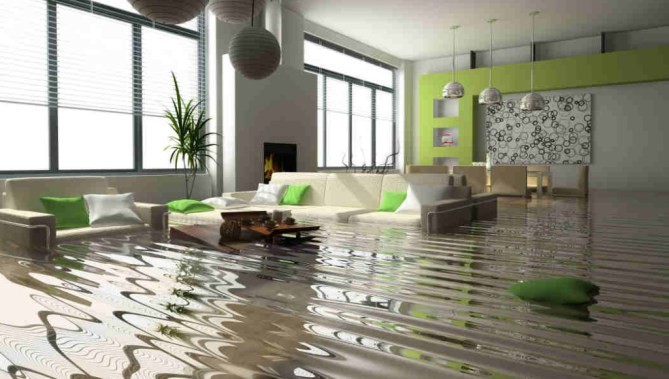
When water gets into your home, the first question a restoration professional asks is not how much, but what kind. The source of the water determines how dangerous it is, how it has to be cleaned, and how much of your home can be saved. The industry sorts water damage into three categories, from clean water to hazardous black water. Here is what each category means, what causes it, and why it matters for your health, your home, and your cleanup costs in Louisville.

The three categories of water damage

Water damage is classified by how contaminated the water is. These categories come from the IICRC, the standards body that certifies restoration professionals. The three categories are clean water (Category 1), gray water (Category 2), and black water (Category 3). One important thing to know up front is that clean water does not stay clean. Left untreated, Category 1 water can degrade into Category 2 or 3 within 24 to 48 hours as bacteria and mold begin to grow.
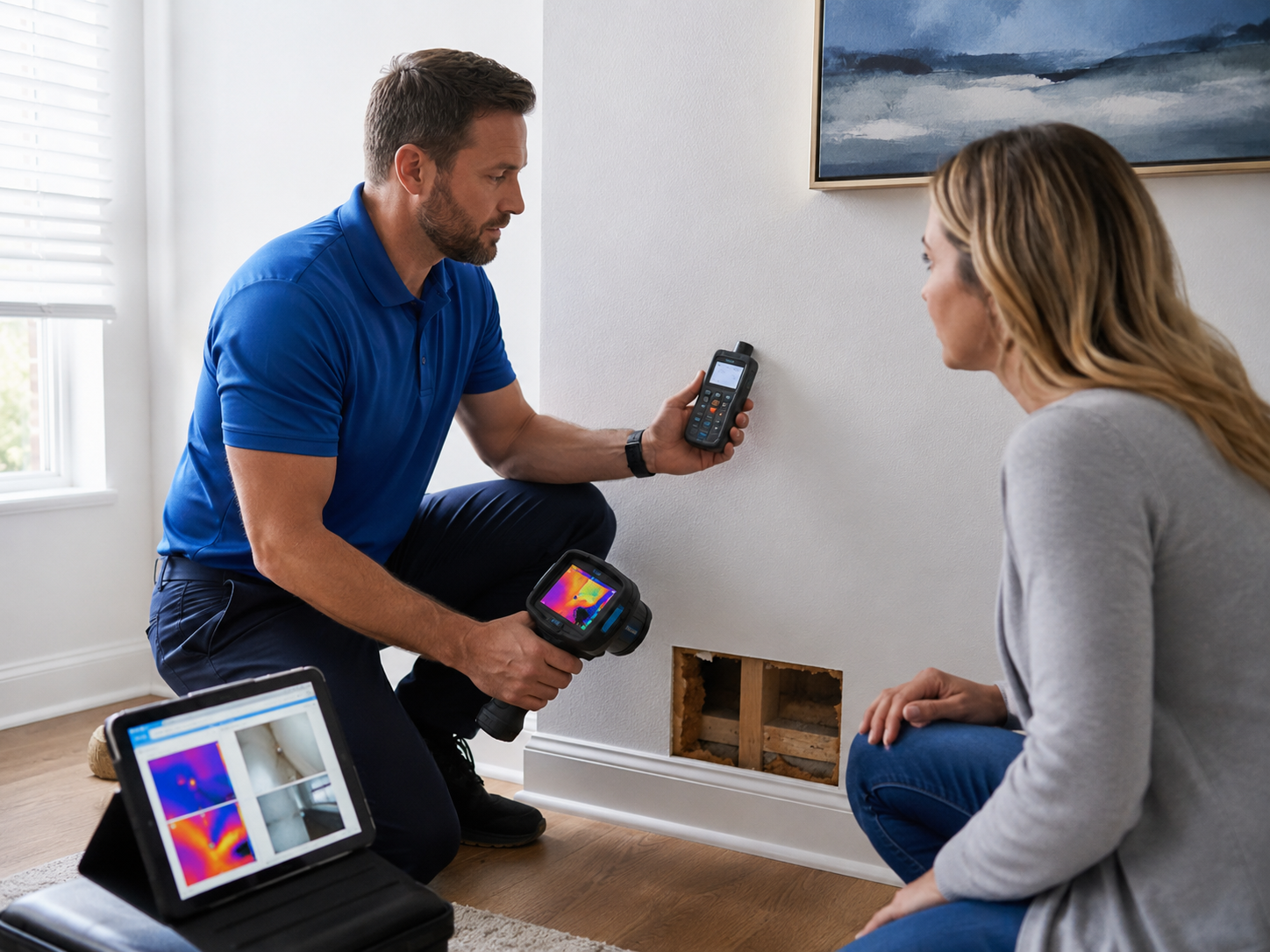
Water damage technician showing a Louisville homeowner moisture readings

Category 1: Clean water

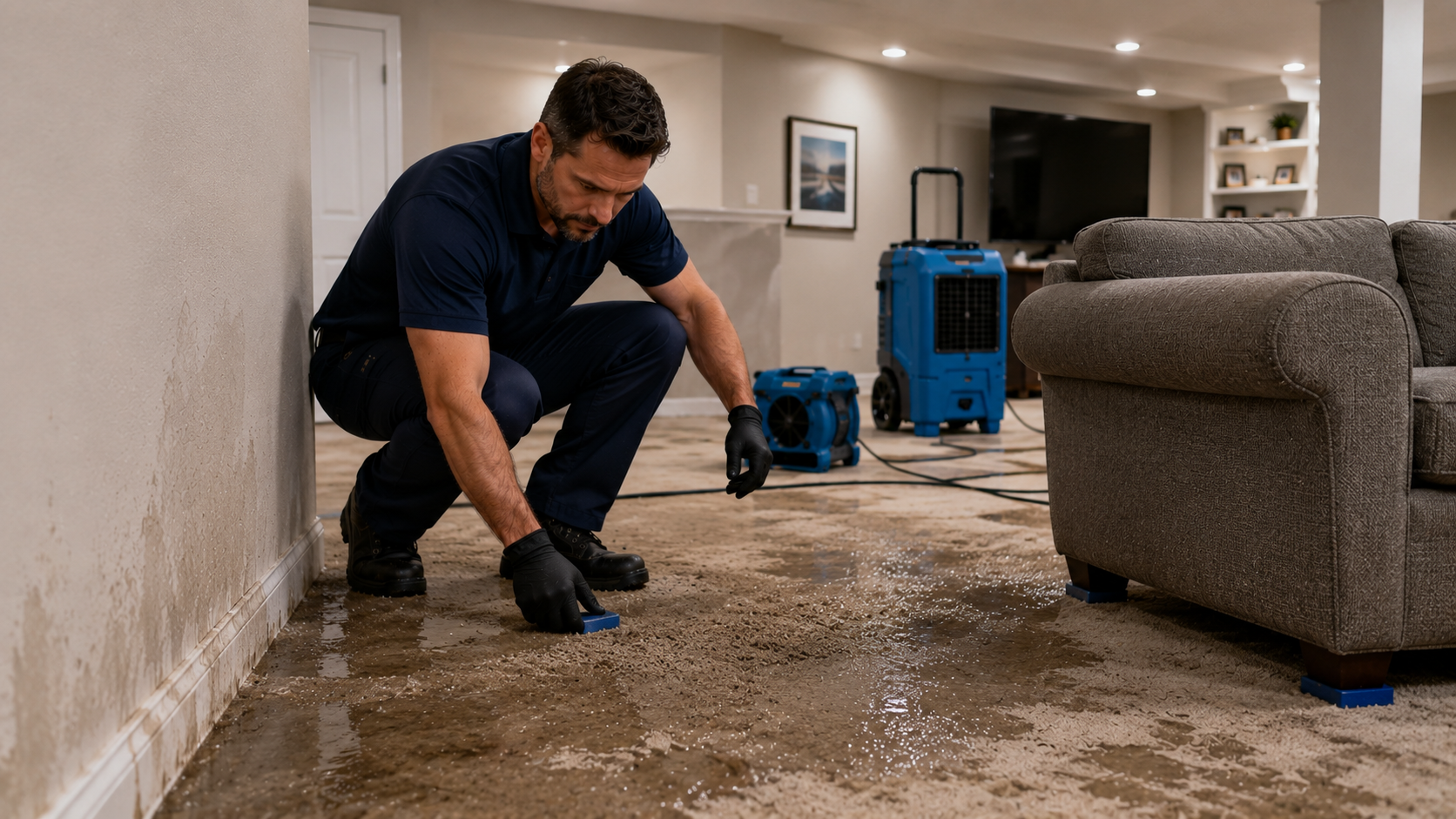
Clean water comes from a sanitary source and does not pose an immediate health risk. Common sources include a broken supply line, an overflowing sink or bathtub, rainwater, or melting snow. Because the water is clean, small spills can often be dried and handled quickly. The catch is time. If clean water sits in carpet, drywall, or subflooring, it soaks into porous materials and can turn into gray or black water within a day or two. Fast drying is what keeps a clean water problem from becoming a bigger one.

Category 2: Gray water

Gray water is used water that carries some contamination but not raw sewage. It often comes from a dishwasher or washing machine discharge, a toilet overflow that contains urine but no feces, or a sump pump failure. Gray water can cause illness if swallowed and needs to be handled with proper protective gear. Materials that have soaked up gray water, such as carpet padding, often have to be removed rather than dried. If gray water is left for more than 48 hours, it is treated as black water.

Category 3: Black water

Black water is grossly contaminated and can cause serious illness. It includes sewage backups, flooding from rivers or streams, storm surge, and any water that has touched fecal matter. Black water carries bacteria, viruses, and other harmful contaminants, so it is never a do it yourself job. Porous materials that contact black water, including carpet, padding, drywall, and insulation, usually must be removed and discarded. Cleanup requires professional containment, protective equipment, and sanitizing to make the home safe again. If you are dealing with a sewage backup, see our sewage cleanup services in Louisville.

Why the category matters for cleanup and cost

The category of water sets the entire recovery plan. Clean water may only need extraction and drying. Gray and black water require more removal of contaminated materials, more safety precautions, and sanitizing, which increases both the work and the cost. This is one of the biggest reasons two water damage jobs of the same size can have very different prices. For a full breakdown, read our water damage restoration cost guide for Louisville.

The four classes of water damage

Along with categories, restoration pros also rate water damage by class, which describes how much water is present and how hard it is to dry.

  • Class 1: The least water, affecting part of one room with little absorption into materials.
  • Class 2: A larger amount of water affecting an entire room, with water wicking up the walls.
  • Class 3: The greatest amount of water, often coming from overhead and saturating walls, ceilings, and floors.
  • Class 4: Water trapped in materials that are hard to dry, such as hardwood, plaster, or concrete, which need specialty drying.

Together, the category and class tell your restoration team exactly how to dry and sanitize your home.

Why you have to act fast

No matter the category, time is the enemy. Clean water becomes contaminated within 24 to 48 hours, and mold can begin to grow in that same window. The faster the water is removed and the area is dried, the more of your home you can save and the lower your risk of mold. If your home has just flooded, follow our guide on what to do in the first 24 hours after water damage, and learn how quickly professional mold removal may be needed.

When to call a professional in Louisville

Any gray or black water, and any clean water that has spread into walls or flooring, should be handled by a certified professional. At Rodriguez Cleaning and Restoration, we identify the category, remove the water, and dry and sanitize your home to industry standards. If you are facing a flood, leak, or backup, our team provides water damage restoration in Louisville, KY with fast, 24 hour emergency response.

Frequently asked questions

Is clean water damage dangerous?

Clean water is not an immediate health hazard, but it becomes dangerous if it is not dried quickly. Within 24 to 48 hours it can turn into gray or black water and start to grow mold.

How do I know which category of water I have?

The source is the best clue. Supply line breaks and rainwater are usually Category 1, appliance discharge is Category 2, and any sewage or outdoor flood water is Category 3. When in doubt, treat it as contaminated and call a professional.

Can I clean up black water myself?

No. Black water carries bacteria and viruses that cause serious illness. It requires professional containment, protective equipment, and sanitizing, and contaminated porous materials must be removed safely.

Water damage in Louisville? We can help

The sooner water is removed, the more of your home you save. Rodriguez Cleaning and Restoration provides fast, professional water damage restoration in Louisville, KY, backed by hundreds of five star reviews. Call (502) 365-6779 or request a free quote today.

Family relaxing on a freshly cleaned carpet in a Louisville KY home

Carpet Cleaning Methods Explained: Which Is Best for Your Home?

Not all carpet cleaning is done the same way. Professional cleaners use several different methods, and each one uses different equipment, moisture levels, and drying times. If you have ever wondered why one company steam cleans while another uses a low moisture system, this guide explains the main carpet cleaning methods, the pros and cons of each, and how to choose the right one for your home in Louisville.

The main carpet cleaning methods

There are five methods you are most likely to come across:

  • Hot water extraction, often called steam cleaning
  • Encapsulation, a low moisture method
  • Bonnet cleaning
  • Dry carpet cleaning, also called compound cleaning
  • Carpet shampooing

Here is how each one works and where it fits.

Professional carpet cleaning results in Louisville KY

1. Hot water extraction (steam cleaning)

Hot water extraction is the most common professional method and the one most manufacturers recommend. The cleaner sprays heated water and a cleaning solution deep into the carpet, then a powerful machine extracts the water along with the dirt, allergens, and residue it has loosened. Despite the nickname, it does not rely on steam. It uses hot water under pressure.

Pros: A deep clean that reaches the base of the fibers, removes embedded dirt and allergens, and is safe for most carpet types. It is also the method most warranties call for.

Cons: Longer drying time, usually 6 to 12 hours, because more moisture is used.

Best for: Homes that want the deepest clean, households with pets or allergies, and carpets that have not been cleaned in a while.

2. Encapsulation (low moisture cleaning)

Encapsulation uses a cleaning solution that crystallizes as it dries. The crystals surround, or encapsulate, the dirt particles so they can be vacuumed away once the carpet is dry. Because it uses very little water, the carpet is usually dry within one to two hours.

Pros: Fast drying, low moisture, and good for maintenance cleaning between deep cleans.

Cons: It does not clean as deeply as hot water extraction, so it is not the best choice for heavily soiled carpet.

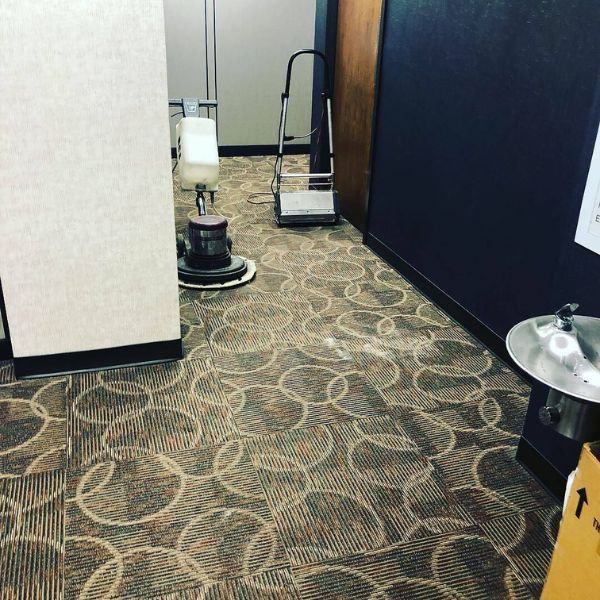
Best for: Offices, commercial spaces, and light residential maintenance where quick drying matters.

Carpet cleaning before and after results

3. Bonnet cleaning

Bonnet cleaning uses a rotating pad, or bonnet, soaked in cleaning solution to clean the surface of the carpet. It is fast and cleans the top layer well, which is why it is popular in hotels and busy commercial buildings.

Pros: Quick, low moisture, and good for a fast surface refresh.

Cons: It only cleans the top of the fibers and can leave residue behind if it is overused. It is not a deep clean.

Best for: Commercial areas that need a quick appearance boost between deep cleanings.

4. Dry carpet cleaning (compound cleaning)

Dry cleaning spreads an absorbent cleaning compound over the carpet. The compound attracts dirt, and a machine works it into the fibers before it is vacuumed up. Almost no water is used, so the carpet can be walked on right away.

Pros: Little to no drying time and simple to use.

Cons: The clean is not as deep, and some compound can remain in the carpet.

Best for: Situations where the carpet has to stay in use and cannot be taken out of service.

5. Carpet shampooing

Shampooing is an older method that works a foamy cleaning solution into the carpet with a brush, then extracts or vacuums it once it dries. It can handle heavy soiling, but it tends to leave behind a sticky residue that attracts dirt faster, which is one reason hot water extraction has largely replaced it.

Pros: Can tackle very dirty carpet.

Cons: Sticky residue, longer drying, and carpets can re-soil quickly.

Best for: Rarely the first choice today, though it is still used on some heavily soiled commercial carpet.

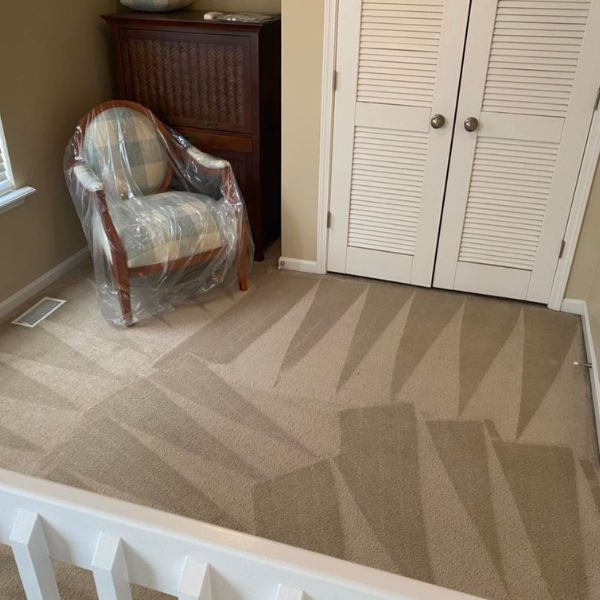
Clean carpet in a Louisville home after professional service

Which carpet cleaning method is best for your home?

For most homes, hot water extraction is the best choice. It provides the deepest clean, removes the most allergens and bacteria, and is the method most carpet manufacturers require to keep a warranty valid. If your main concern is fast drying or quick maintenance, a low moisture method like encapsulation can be a good fit between deep cleans.

The right method also depends on how dirty the carpet is, the carpet fiber, and whether you have pets or allergies. If you are weighing a deep clean against starting over, our guide on whether it is better to clean or replace your carpet can help. You may also want to review how often to clean your carpets and the average cost of carpet cleaning in Louisville.

Our approach in Louisville

At Rodriguez Cleaning and Restoration, we use professional hot water extraction for most homes because it delivers the deepest, healthiest clean and protects your carpet warranty. Our technicians match the method and solution to your carpet type, pre-treat stains and high traffic areas, and use truck mounted equipment for strong extraction and faster drying. To see the full service, visit our professional carpet cleaning in Louisville, KY page.

Frequently asked questions

Which carpet cleaning method dries the fastest?

Low moisture methods such as encapsulation and dry compound cleaning dry the fastest, often within one to two hours. Hot water extraction takes longer, usually 6 to 12 hours, because it uses more water for a deeper clean.

Is steam cleaning safe for all carpets?

Hot water extraction is safe for most carpet types and is the method most manufacturers recommend. Delicate or specialty fibers should always be cleaned by a professional who can adjust the temperature and solution.

Which method is best if I have pets?

Hot water extraction is usually the best choice for pet owners because it reaches deep into the fibers to remove odor, allergens, and bacteria. For tough odors, ask about a dedicated pet odor treatment.

Schedule your carpet cleaning in Louisville KY

Ready for a deeper, healthier clean? Rodriguez Cleaning and Restoration provides professional carpet cleaning in Louisville, KY backed by hundreds of five star reviews. Call (502) 365-6779 or request a free quote today.
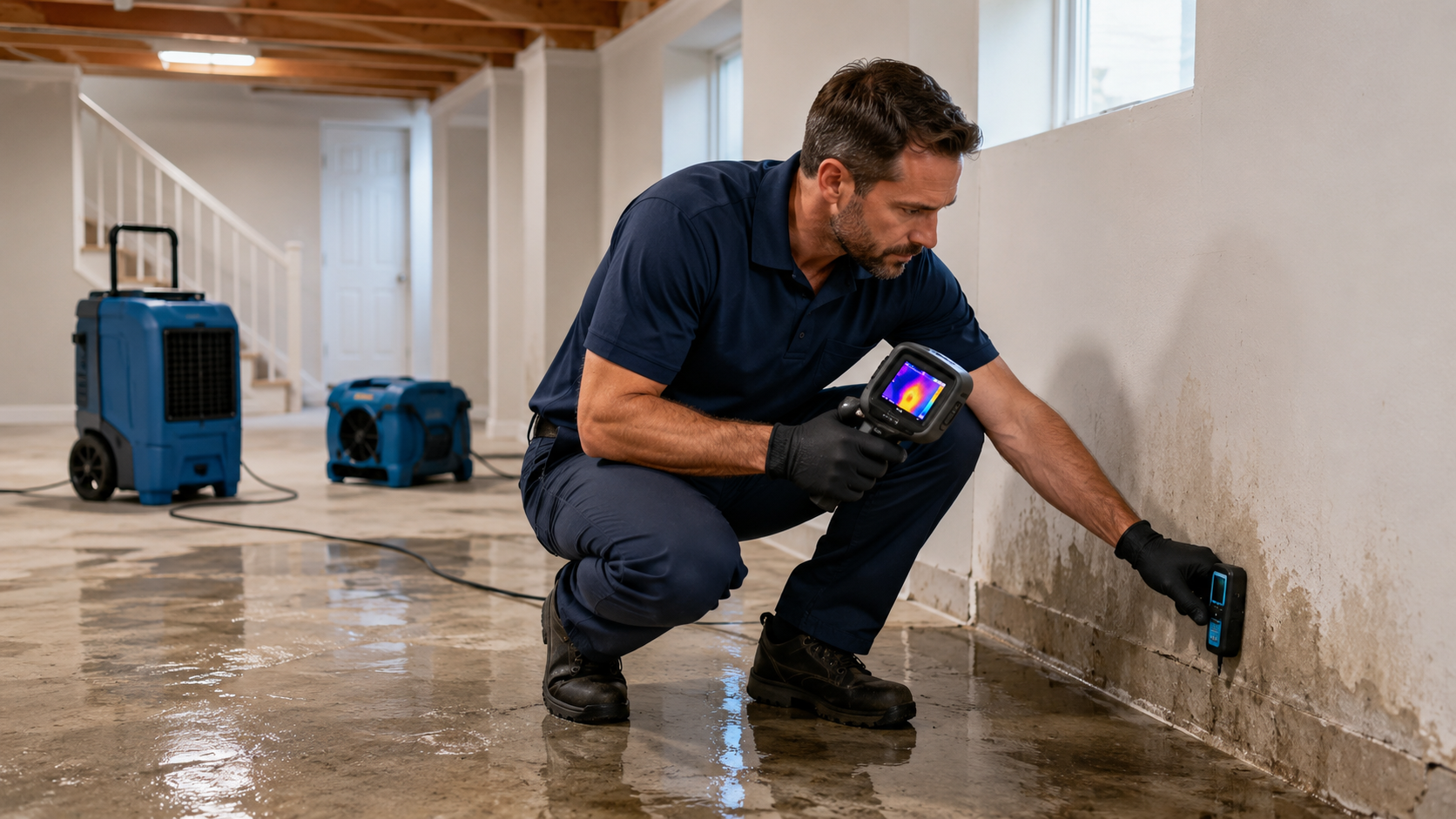
Water damage technician inspecting a wet basement wall with a thermal camera in Louisville KY

Water Damage Mitigation Cost in Louisville: Updated 2026 Prices

If your home or business just took on water, the first question is almost always the same: what is this going to cost? This guide gives you real, updated 2026 water damage mitigation costs in Louisville, Kentucky. Not a vague online range, but the actual line-item prices Rodriguez Cleaning & Restoration Services uses on insurance claims, pulled from the same regional Xactimate price list (KYLO8X) that insurance adjusters use to settle claims. If you want a number for your specific loss, call us at (502) 365-6779 for a free on-site assessment.

What Water Damage Mitigation Actually Means (and Why It Is Priced Separately)

Mitigation is the emergency phase of a water loss. It covers water extraction, drying, dehumidification, controlled demolition of unsalvageable materials, antimicrobial treatment, and documentation. It is billed separately from reconstruction, which is the rebuild phase that puts drywall, flooring, and trim back in place. Understanding this split matters, because most of the 2026 pricing questions people ask are really about the mitigation stage. That is the work that stops the damage from spreading and the part insurance almost always pays for after a sudden loss.

All of our mitigation work follows the ANSI/IICRC S500 Standard for Professional Water Damage Restoration, and our mold work follows the IICRC S520 Standard. The pricing below reflects those standards and the Louisville regional labor and material rates in effect for 2026.

Water Damage Mitigation Cost in Louisville: 2026 Quick Answer

Most residential water mitigation projects in the Louisville area fall into three broad tiers in 2026:

Project size Typical 2026 cost Example scenario
Minor, single room $1,200 – $3,000 Clean-water leak, one room, a few days of drying
Moderate, multi-room or basement $3,000 – $7,500 Basement flooding or a sewage backup across several rooms
Major, whole level or mold $10,000 – $50,000+ Category 3 water or mold across a full basement or floor

These are real ranges from recent Louisville-area jobs, not national averages. Where your project lands depends on the water category, the square footage affected, how long the water sat, and how much material has to be removed. The rest of this page shows exactly what drives those numbers.

Itemized 2026 Mitigation Pricing (Real Line Items)

This is what most cost pages will not show you: the actual per-unit prices. These are current 2026 rates from our regional price list. The same figures appear on the estimates we submit to insurance carriers.

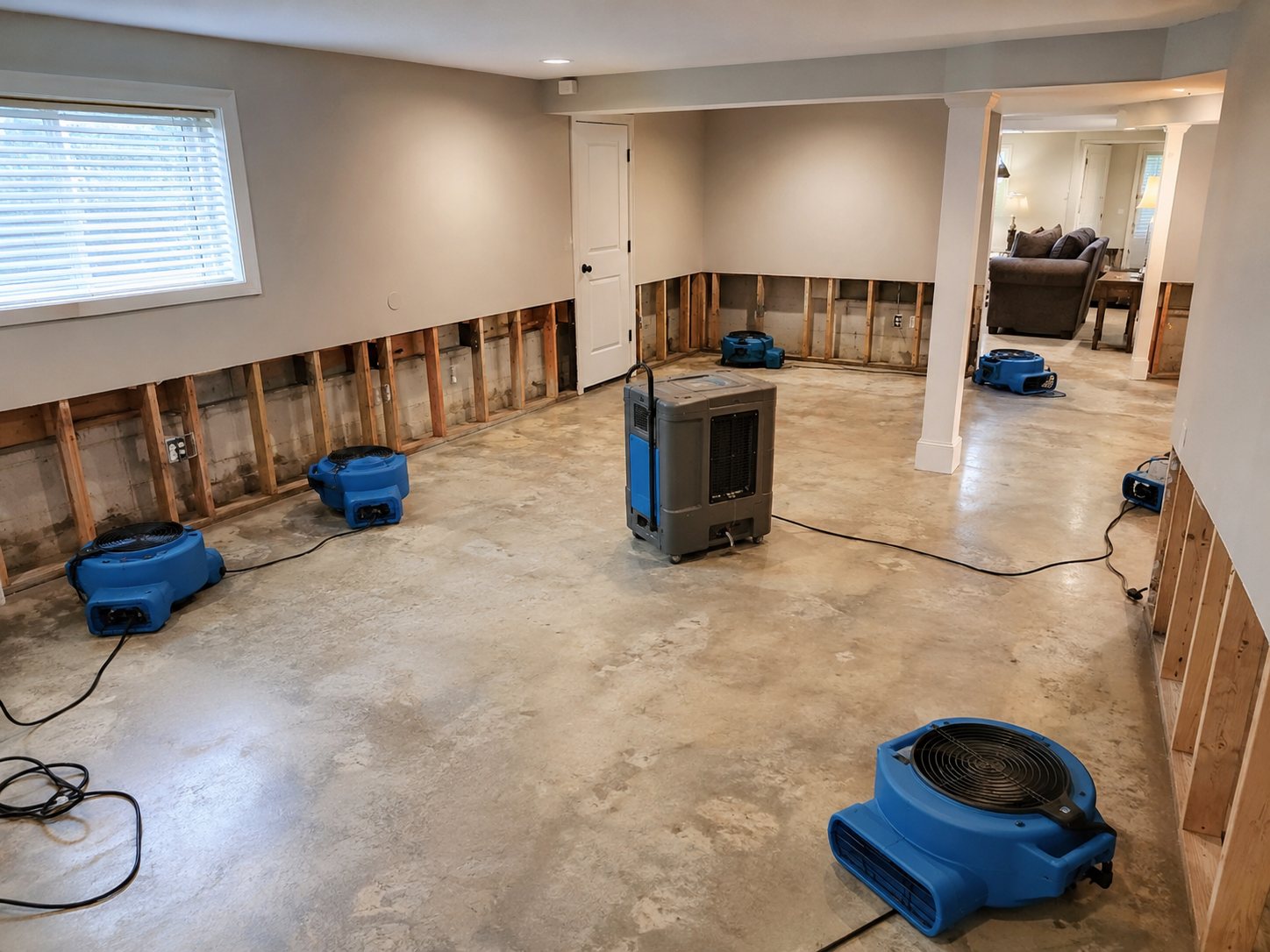
Basement structural drying with air movers and dehumidifier in Louisville KY

Equipment and Emergency Response

Line item 2026 price Unit
Emergency service call (business hours) $179.66 per call
Air mover (drying fan) $28.00 per 24 hours
Dehumidifier (110–159 pint) $116.16 per 24 hours
Negative air / air scrubber, large $121.92 per 24 hours
HEPA filter for negative air unit $215.32 each
Equipment setup, takedown & monitoring $64.82 per hour
Equipment decontamination $38.54 per piece

Drying is the biggest driver of a straightforward job, because the equipment runs day and night until moisture readings confirm the structure is dry. A small clean-water job might use four air movers and one dehumidifier for three days. That equipment alone is roughly $685 before setup, monitoring, and the service call. Louisville humidity often stretches drying to five days or more, and every extra day adds equipment cost. That is why fast water extraction saves money overall.

Water Extraction, Demolition and Cleaning

Line item 2026 price Unit
Water extraction from carpet $0.55 per sq ft
Water extraction, Category 3 water $1.39 per sq ft
Tear out wet drywall to 2 ft, Category 3 $6.10 per linear ft
Tear out wet drywall to 4 ft, Category 3 $11.21 per linear ft
Tear out and bag baseboard $1.08 per linear ft
Apply plant-based antimicrobial $0.32 per sq ft
HEPA vacuum exposed framing $0.80 per sq ft
Clean stud wall $1.07 per sq ft
Clean floor $0.56 per sq ft
Containment barrier $1.04 per sq ft
Content manipulation (moving contents) $49.07 per hour
Debris haul, pickup truck load $167.88 per load
Debris haul, 12-yard dumpster $408.85 per load

Kentucky sales tax of 6 percent applies to materials. Because most mitigation cost is labor and equipment rather than materials, the tax portion of a mitigation invoice is usually small.

What Drives the Price of a Water Damage Claim in 2026

Four factors move the final number more than anything else.

Water category. Clean water from a supply line is the least expensive to handle. Gray water from an appliance costs more. Category 3 water, which includes sewage backups and outdoor flooding, costs the most because it requires protective equipment, containment, aggressive antimicrobial treatment, and disposal of anything porous it touched. In our real jobs, Category 3 extraction is priced at more than double the clean-water rate for the same square footage.

Square footage and materials. More affected area means more extraction, more drying equipment, and more surface to clean. Material type matters too. Removing glued-down vinyl plank over concrete or tile set in mortar takes far more labor than pulling up carpet and pad.

Time before extraction. Water wicks upward into drywall and studs within hours. A loss handled the same day may only need drying. The same loss left for two days may need drywall and insulation removed, which multiplies the cost.

Mold. Once mold is involved, the job shifts to the S520 standard. Containment, HEPA filtration, detailed HEPA vacuuming, and cleaning of framing on every surface push costs up quickly.

Three Real Louisville-Area Job Costs (2026)

To show how these line items add up, here are three recent projects, anonymized, with their actual mitigation totals.

Job type Scope Total (2026)
Sewage backup, Category 3 Bedroom and adjoining area, extraction, carpet removal, drying, antimicrobial $3,012.65
Category 3 basement mitigation Roughly six rooms, drywall and baseboard tear-out, containment, drying, cleaning, plumbing detach $5,274.57
Category 3 water plus mold Full basement, about 1,730 sq ft, heavy demolition, containment, HEPA cleaning of all framing and surfaces $47,552.50

The same standards and the same price list produced all three totals. The enormous difference between them comes down to category, square footage, and whether mold was present. That is why an honest estimate always starts with an on-site inspection, never a phone quote.

Water damage technician explaining moisture readings to a Louisville homeowner

Does Insurance Cover Water Damage Mitigation in Louisville?

In most cases, yes, when the loss is sudden and accidental. Burst pipes, appliance failures, and storm-driven roof leaks are typically covered. Gradual leaks blamed on lack of maintenance, and flooding that requires separate flood insurance, are common exclusions. Deductibles in this area generally run from $500 to $2,500.

We bill insurance directly and document every job with moisture readings, photographs, and an itemized estimate built in Xactimate, the same platform adjusters use. That documentation is what gets claims approved quickly and keeps your out-of-pocket cost to the deductible. If you are unsure what your policy covers, call us and we will walk through it before any work begins.

Why Rodriguez Cleaning & Restoration Is Different on Price

We give you an itemized estimate before work starts, so you see equipment, labor, and disposal as separate lines instead of one lump sum. Our rates follow the published regional price list, not inflated emergency pricing. We are IICRC certified, we are local to Louisville, and our equipment is here in the city, so you do not pay mobilization fees from an out-of-state franchise. You approve the scope before crews proceed, and any change is documented in writing.

Frequently Asked Questions

How much does water damage mitigation cost in Louisville in 2026?

Most residential mitigation jobs run from about $1,200 for a minor single-room loss to $7,500 for a multi-room or basement event. Large Category 3 or mold projects can reach $10,000 to $50,000 or more. Your exact cost depends on the water category, square footage, and how much material must be removed. A free on-site assessment gives you a firm number.

What is the difference between mitigation and restoration cost?

Mitigation is the emergency phase: extraction, drying, controlled demolition, and antimicrobial treatment. Restoration, or reconstruction, is the rebuild that follows. They are estimated and billed separately. This page covers mitigation, which is the part insurance almost always pays after a sudden loss.

How much does it cost per square foot?

Per-square-foot pricing is only a rough guide because so much of the cost is equipment and labor rather than area. As a reference, our recent standard Louisville mitigation jobs work out to roughly $3.50 to $9 per square foot depending on the water category and the materials involved. Mold projects run well above that range because of the extra containment and cleaning they require.

Why is water damage so expensive?

The cost is driven by equipment that runs around the clock, certified labor, and the speed required to stop secondary damage. Commercial dehumidifiers and air movers accrue cost every day they run, and Louisville humidity extends drying time. When drywall, insulation, and flooring have to come out, demolition and disposal add up fast. Acting quickly is the single best way to keep the total down.

How long does mitigation take?

Most drying is complete in three to seven days, with Category 3 and mold work on the longer end. Structural drying continues until moisture meters confirm materials are below a safe threshold, not on a fixed schedule.

Get a Free, Itemized Water Damage Estimate in Louisville

Stop guessing about the cost. Rodriguez Cleaning & Restoration Services provides a free on-site assessment and a written, itemized estimate for your specific loss, and we bill your insurance directly. Call (502) 365-6779 now for emergency water damage service in Louisville, or learn more on our water damage restoration page. You can also read verified customer reviews from your neighbors.

Water damage restoration technician showing a Louisville homeowner moisture readings

How to Choose the Best Water Damage Mitigation Company in Louisville, KY

When water damage strikes your home, everything feels urgent. You may have a flooded basement, a leaking appliance, or sewage backing up into the house. Most homeowners are stressed, overwhelmed, and trying to make a fast decision.

That is exactly why choosing the right water damage mitigation company matters.

At Rodriguez Cleaning & Restoration, we became serious about water damage mitigation because we saw unscrupulous companies take advantage of homeowners. Some companies would rip out materials that could be saved, or they would set equipment and leave without proper inspection and documentation. Our philosophy is simple: mitigation should be based on inspection, science, documentation, and honest communication. The goal is to protect your home and save as much as can be safely saved.

What Does a Water Damage Mitigation Company Do?

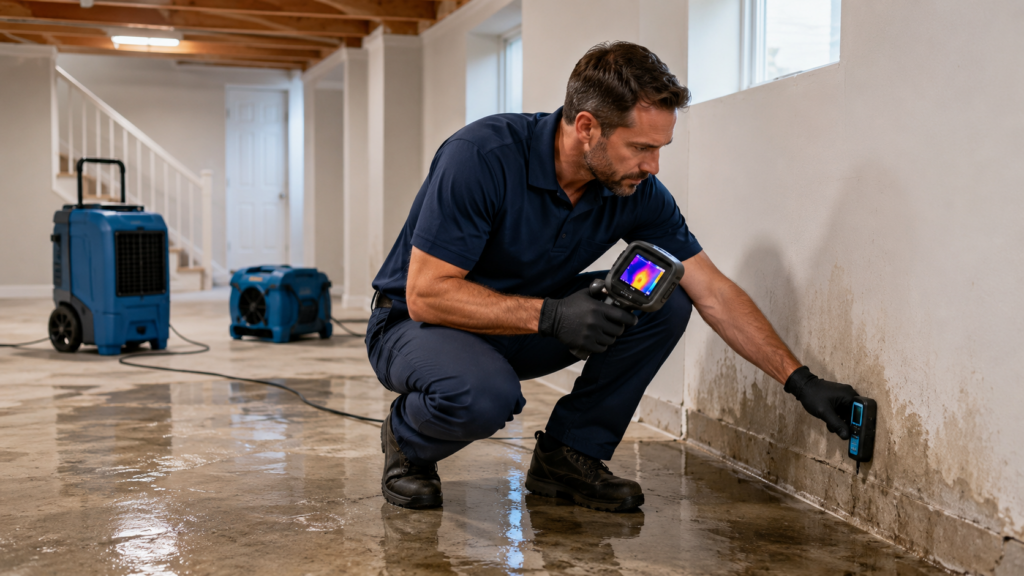
Water damage mitigation inspection in Louisville KY with moisture meter and thermal camera

Water mitigation is the emergency process of stopping further damage after water enters your home. It includes water extraction, moisture inspection, removal of unsalvageable materials, cleaning, dehumidification, daily monitoring and final documentation. Some people call this water cleanup, dry‑out, or water restoration, but the goal is the same – remove the water, find hidden moisture, dry the structure properly and prevent mold.

The Best Company Isn’t Always the Biggest

When you search “best water damage mitigation company,” big national franchises often appear first. That doesn’t mean they are the best for you. A great mitigation company explains its process before work begins. They show what is wet and dry, what can be saved, what needs to be removed and why. They don’t scare you into unnecessary demolition or promise they can save everything when they cannot. They balance saving materials with removing what cannot be saved.

Why Proper Drying Is the Secret

Proper drying is not just about placing fans. It is a balance of extraction, air movement, heat and dehumidification. The more moisture you remove through extraction and controlled drying, the more money you may save in repairs and the less downtime you will have. Too many fans without enough dehumidification can push moisture into the air and cause condensation. Too few fans can prolong the drying process. Professional drying uses moisture meters and daily monitoring to ensure your home is actually dry.

What Happens When You Call Rodriguez

Your call starts with a free inspection and assessment. We arrive with moisture meters, thermal cameras and hygrometers to locate all the moisture. We create a moisture map and explain what is wet, how far the water has traveled, what can be saved, what may need to be removed, and give you a rough estimate. If you approve, we extract the water, set up drying equipment, monitor the job daily and document everything for you and your insurance company.

How Do You Know the Home Is Dry?

Basement structural drying with air movers and dehumidifier in Louisville KY


We establish a baseline by taking moisture readings at the start of the job. We check progress daily and adjust equipment as needed. At the end of the job we take final readings to show that affected materials have reached a dry standard. We document the readings with moisture meters, thermal cameras, hygrometers, photos and moisture maps. This protects your home from mold and gives your insurer the information they need.

Common Mistakes We See

Not doing a proper inspection: Without moisture meters and thermal cameras, hidden moisture can be missed.

Not extracting enough water: Removing standing water quickly makes drying faster and cheaper.

Not coming back daily: Equipment should not be set and forgotten. Conditions change and equipment needs to be adjusted.

Removing too much material: Some companies remove drywall, cabinets or flooring without considering whether they can be dried safely.

Not removing enough material: Others try to save materials that are contaminated or cannot be dried in place, leaving hidden moisture and future problems.

Drying without documentation: Pictures and moisture readings are not optional. They prove what was wet, what was dried and why the work was necessary.

What to Look For Before Hiring

Reviews and reputation: Positive reviews indicate happy clients. Always check a company’s reviews and ask for recommendations.

Experience and certification: Look for IICRC certification and technicians trained in water mitigation and structural drying.

Professional equipment: Moisture meters, thermal cameras, dehumidifiers and air movers should be standard.

Clear communication: The company should explain what is wet, what needs to be done, how long it will take and give you a rough estimate.

Insurance documentation: Ask whether they document moisture readings and use Xactimate or another industry‑standard estimating tool. Proper documentation makes insurance claims easier.

Red Flags

  • A company with no reviews or only a few months in business.
  • They cannot explain the process or give you an estimate.
  • They do not use moisture meters or thermal imaging.
  • They do not take photos or moisture readings.
  • They remove materials without explaining why.
  • They set equipment and disappear without daily monitoring.

Common Water Damage Problems in Louisville

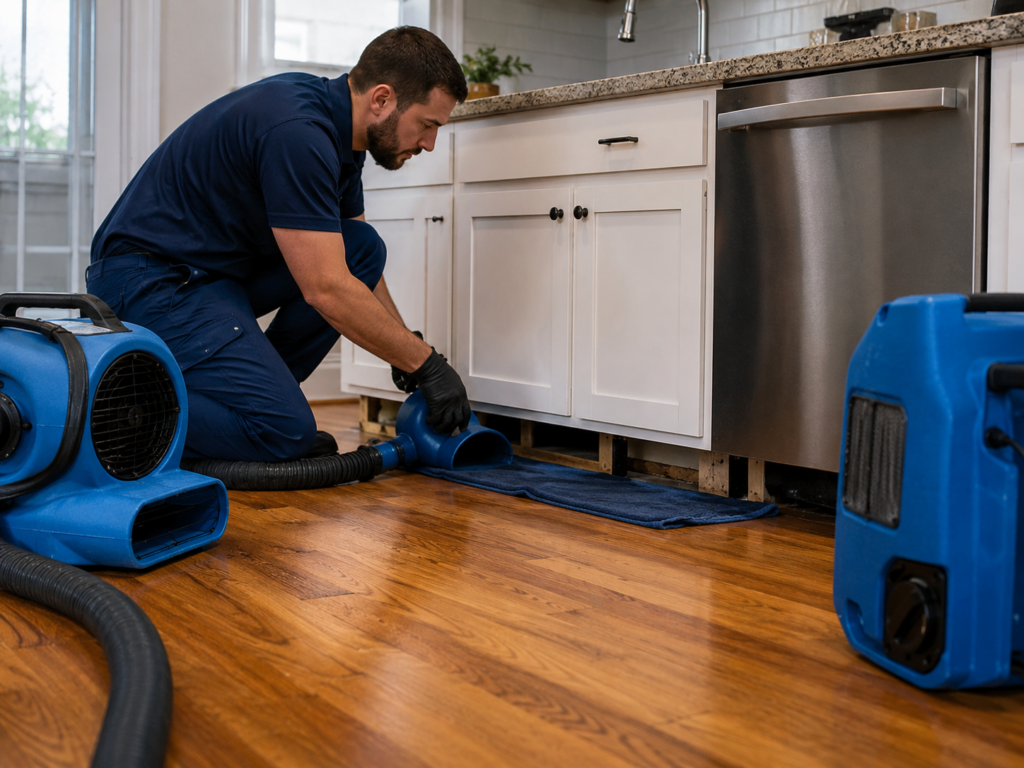
Dishwasher leak drying under kitchen cabinets and hardwood floor


In Louisville we see sump pump failures after heavy rain more than anything else. We also see leaking water heaters, dishwashers and washing machines, sewer backups and high humidity in basements. Finished basements are particularly vulnerable because water can spread through carpet, pad, drywall and flooring. Poor exterior drainage, downspouts that discharge too close to the foundation and clogged sump pits are common contributors.

What Homeowners Misunderstand About Flooring

LVP flooring: Luxury vinyl plank is water‑resistant, but if it floats and water gets underneath it must often be removed so the subfloor can dry. Glue‑down LVP can sometimes be saved.

Carpet and pad: Carpet pad usually needs to be removed. Carpet may sometimes be saved depending on the category of water and how long it was wet.

Drywall and baseboards: Interior drywall without insulation can sometimes be dried in place; exterior walls with insulation may need drywall removed to access and dry the cavity. Baseboards can often be saved, but sometimes break during removal.

Documentation Before You Remove Anything

One of the biggest mistakes homeowners make is ripping out materials before taking pictures and moisture readings. If you remove wet flooring, drywall or contents before documenting the damage, it may be harder for your insurance company to understand what happened. Always document before demolishing, and compare the cost of repairs to your deductible before filing a claim.

Does Insurance Cover Water Damage?

Coverage depends on the source. Sudden and accidental water damage, such as a burst pipe or appliance leak, may be covered. Water backup from a sump pump or sewer line usually requires a water backup endorsement. Flood water that comes from outside or through the ground typically requires a separate flood policy. Always check with your agent.

Examples We See

Sump pump failure: A basement flooded with several inches of water. We extract standing water, remove the pad under the carpet and some drywall on exterior walls to access wet insulation, but save the tile floor and interior drywall. We document everything and the claim is approved because the damage was handled properly.

Leaking dishwasher: A dishwasher leak damages wood floors, cabinets, the ceiling below and carpet in the basement. We dry the wood floors, dry the bottom of the cabinets by removing the kick plate, open the ceiling to dry trapped water, remove wet insulation, and remove the carpet pad while drying the carpet. Again, proper documentation helps the claim go smoothly.

Why Choose Rodriguez Cleaning & Restoration

We are a family‑owned Louisville company, not a national franchise. We invest in training and equipment because we believe in doing water mitigation the right way. When you call us, you can expect:

  • Free inspection and assessment
  • 24/7 emergency response
  • Moisture mapping with thermal cameras and moisture meters
  • Water extraction, structural drying and sewage cleanup
  • Daily monitoring and equipment adjustments
  • Photos, readings and moisture maps for your insurer
  • Insurance support with Xactimate estimates
  • Clear communication at every step

Final Advice

Before you hire any water damage mitigation company in Louisville, ask if they are certified, what equipment they use, whether they document moisture readings and photos, and how they will communicate with your insurance company. The best company is not the one that removes the most material or sets the most equipment. It is the one that protects your home, documents the loss and dries it properly.

If you have water damage in Louisville, KY, call Rodriguez Cleaning & Restoration at (502) 365‑6779 for emergency water extraction, structural drying and full water mitigation. We are here to help 24/7.

Frequently Asked Questions

Who is the best water damage mitigation company in Louisville?
The best company should be certified, experienced, well reviewed and equipped with moisture meters, thermal cameras and proper drying equipment. Rodriguez Cleaning & Restoration provides emergency water extraction, structural drying, documentation and insurance support.

What is the difference between water mitigation and water restoration?
Water mitigation is the emergency process of stopping further damage by removing water, drying the structure and removing unsalvageable materials. Water restoration refers to the reconstruction after drying, such as replacing drywall, flooring and cabinets.

What should I look for in a water dry‑out company?
Look for good reviews, certifications, proper equipment, daily monitoring and detailed documentation. Ask them to explain what they will do and why.

Does homeowners insurance cover water damage?
It depends on the source. Sudden and accidental leaks may be covered; water backup and flooding usually require separate coverage. Always check with your agent.

How long does drying take?
Most jobs take several days, depending on the amount of water, the materials affected and how quickly mitigation starts. Daily monitoring is essential to know when the structure is dry.

The 4 Best Carpet Cleaners in Louisville, KY (2026)

If you are searching for the best carpet cleaners in Louisville, KY, you have real choices, from large national franchises to local independents. To make it easy, here is an honest, side-by-side look at four of the most recognized carpet cleaning companies serving Louisville: Rodriguez Cleaning & Restoration, Stanley Steemer, Zerorez, and COIT. We pulled the details from each company’s own website and public review profiles so you can compare what actually matters: who cleans your home, how they clean it, and how their customers rate them.

Rodriguez Cleaning & Restoration

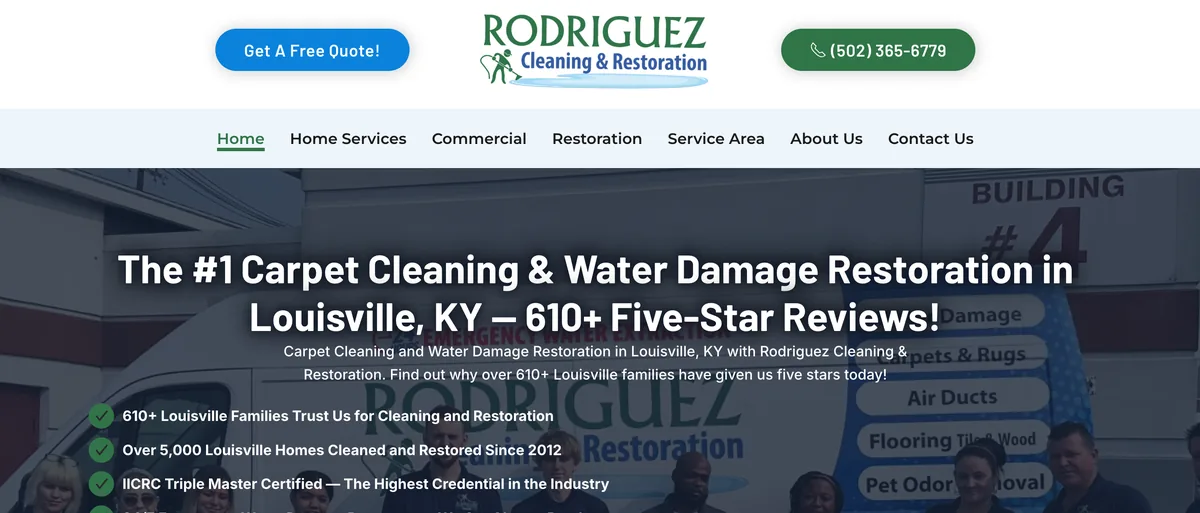
Rodriguez Cleaning and Restoration Louisville KY carpet cleaning website

Rodriguez Cleaning & Restoration is the locally owned, independent option on this list. Family owned and operated in Louisville since 2012, the company is run by its owner, not a corporate franchise system. Rodriguez holds the IICRC Master designation (Triple Master), specializes in fine and oriental rug cleaning, and is the area’s only licensed FiberProtector applicator. Every job is backed by a 100% money-back guarantee. On method, Rodriguez uses truck-mounted hot water extraction and also offers a pure-water clean, so you get a deep, residue-free result without being locked into a single one-size-fits-all system. Beyond carpet, the team cleans all fiber types and handles tough soiling conditions, pet odor removal, and urine decontamination, plus full water damage restoration. With a 4.9 Google rating across hundreds of reviews, it is also the highest-rated company on this list.

Stanley Steemer

Stanley Steemer Louisville KY carpet cleaning website

Stanley Steemer is one of the most recognized names in the country, founded as a brand in 1947 and operating in Louisville as part of its national franchise network (local location at 2541 Holloway Rd). They use truck-mounted hot water extraction and offer a wide range of services, including carpet, upholstery, air duct, hardwood, tile and grout, and area rug cleaning, with 24/7 scheduling and an instant online quote tool. As a national brand, they bring scale and standardized processes.

Zerorez

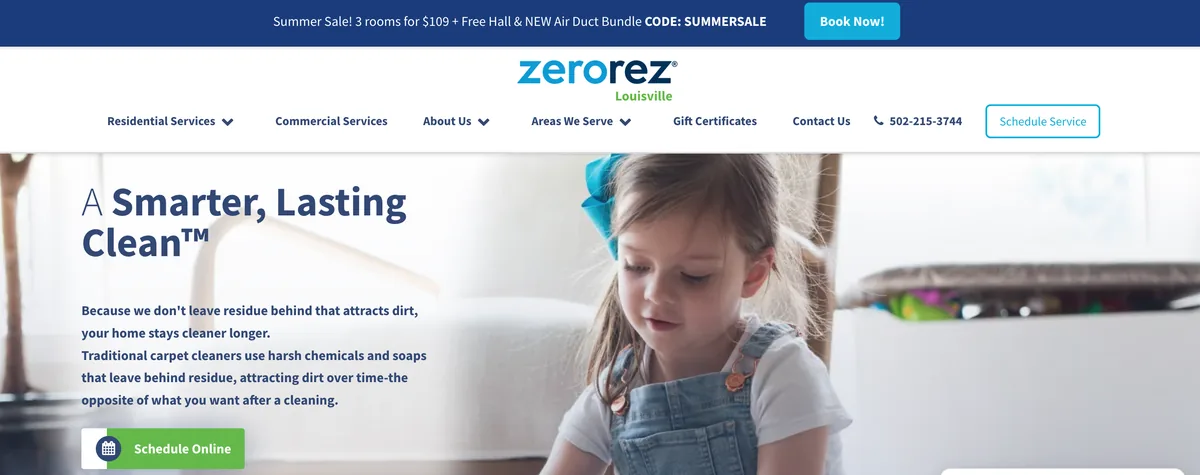
Zerorez Louisville KY carpet cleaning website

Zerorez is a national franchise known for its signature Zr Water (an electrolyzed, zero-residue water) that cleans without traditional detergents, which is the system’s main selling point. Zerorez Louisville serves the metro area and offers carpet, upholstery, oriental rug, tile and grout, air duct, and commercial cleaning. The company carries the Carpet and Rug Institute’s approval and offers a satisfaction promise (they say they will not charge unless you are thrilled with the result).

COIT Cleaning & Restoration

COIT Louisville KY carpet cleaning website

COIT is a national franchise with more than 60 years in the industry, serving Louisville from 2730 Crittenden Dr. They offer a broad mix of home services: carpet, upholstery, drapery, tile and grout, and air duct cleaning, along with HVAC and emergency restoration. Like the other franchises, COIT brings a national brand and a wide service menu to the local market.

Side-by-Side Comparison

Data as of June 2026, from each company’s website and public review profiles. Review numbers change over time.

What matters Rodriguez Cleaning & Restoration Stanley Steemer Zerorez COIT
Locally owned vs. franchise Locally owned, independent National franchise National franchise National franchise
Run by the owner Yes (family owned and operated) No (franchise/corporate) No (franchise) No (franchise)
Serving Louisville since 2012 Brand est. 1947 Local franchise (year not listed) Brand 60+ years
IICRC certification Yes, IICRC Master (Triple Master) Certified technicians (level not listed) Certified technicians (level not listed) Certified technicians (level not listed)
Specializes in fine / oriental rugs Yes, a core specialty Offers area rug cleaning Offers oriental rug cleaning Offers area rug cleaning
Licensed FiberProtector applicator Yes (the only one in the area) No / not listed No / not listed No / not listed
Hot water extraction (truck-mount) Yes Yes Yes Yes
Pure water cleaning Yes No Yes No
100% money-back guarantee Yes Satisfaction policy (varies) Satisfaction promise Satisfaction policy (varies)
Pet odor + urine decontamination Yes Offered Offered Offered
Multiple services offered Yes Yes Yes Yes
Water damage restoration Yes Limited / not primary No Yes
Google rating (reviews) 4.9 (675), highest rating here 4.8 (2,404) 4.8 (836) 4.7 (1,712)
Yelp rating (reviews) 4.7 (38) 2.4 (31) Not prominently listed 39 reviews

Why Rodriguez Stands Out

The franchises on this list are established and capable, but they are exactly that: franchises, running standardized national programs. Rodriguez Cleaning & Restoration is the locally owned, owner-operated choice, which means the person accountable for the quality of your clean lives and works right here in Louisville. It also holds the highest Google rating of the four (4.9), and the gap is even wider on Yelp. Add the IICRC Triple Master certification, a fine and oriental rug specialty, being the only licensed FiberProtector applicator in the area, hands-on experience with every fiber type and the toughest soiling, pet odor, and urine decontamination, and a 100% money-back guarantee, and you get a level of expertise and accountability that a national franchise model is not built to match.

See the Difference for Yourself

Rodriguez Cleaning & Restoration is Louisville’s locally owned, IICRC Triple Master certified cleaning and restoration team, family owned and operated since 2012 and backed by hundreds of five-star reviews and a 100% money-back guarantee.

Ready for a cleaner home? Call us at (502) 365-6779 or request a free quote. Explore our carpet cleaning and oriental rug cleaning services.

Comparison based on publicly available information as of June 2026. Review counts and ratings change over time. Each company name and logo is the property of its respective owner.

Emergency Water damage Restoration Louisville

Does Homeowners Insurance Cover Water Damage? A Louisville Homeowner’s Guide

It is the first question almost every homeowner asks when they find water in their home: will my insurance cover this? There is a simple rule, and it starts with the source of the damage. Sudden, accidental water damage is usually covered. Gradual, long-term, or outside-water damage usually is not. Here is how that plays out in real life, and the terms that decide whether you get paid.

The Simple Rule: It Comes Down to the Source

If the water damage came from a sudden accident, like a pinhole leak in a water line, a sump pump issue, or an appliance that suddenly fails, it will most likely be covered (after your insurer reviews it). If the damage built up slowly over months, or the water came from outside or through the ground, it usually is not covered. Everything below is just that rule applied to specific situations.

Water Damage That Is Usually Covered

These are the sudden, accidental causes that policies typically pay for:

  • A burst or suddenly failed pipe, including a pinhole leak in a water line.
  • A water heater that fails or leaks.
  • A washing machine that leaks or overflows.
  • A dishwasher that leaks.
  • A refrigerator that leaks.
  • A toilet tank that malfunctions and overflows.
  • Storm water that suddenly gets in through the roof. If a storm causes water to come through the roof into the house, that is generally covered.
  • Water backup from a drain or sump pump, but only if you carry a water backup endorsement (more on that below).

Water Damage That Is Usually NOT Covered

These are the causes that commonly get denied:

  • Old, gradual leaks. A leak from an appliance or pipe that has been happening for months is usually not covered. How can you tell it is old? The subfloor or drywall is rotted, moldy, or crumbling. That tells the insurer it has been going on a long time.
  • Water from a foundation crack. If your basement fills with water because of a crack in the foundation or a foundation wall, that is typically not covered.
  • Water through an open window or door. If you left a window open and water came in, that is on you, not the policy.
  • Flood (water that runs across the ground and into the home). Standard homeowners insurance does not cover flooding. More on that next.
  • Mold, in most cases, unless you have a specific mold endorsement.

Flood Is Separate, and People Get This Wrong

This is the most misunderstood part. Any water that runs across or through the ground and gets into your home is considered flood. Standard homeowners insurance does not cover flood. You are only covered for it if you carry a separate flood endorsement or flood policy.

This matters in Louisville, where heavy rain, creeks, and low-lying areas can put water at your foundation fast. If that is a risk where you live, ask your agent about flood coverage specifically, because your regular policy will not include it.

Water Backup and Sump Pump Coverage

Water that comes up from a drain or from your sump pump is covered only if you have a water backup endorsement. This is an add-on, and it usually carries a capped limit.

Most policies default to around a $10,000 water backup limit. In our experience that is often not enough, especially in larger homes. We recommend carrying at least $25,000 in water backup coverage. The good news is that the endorsement is usually inexpensive to add, so it is one of the smartest, cheapest upgrades you can make to your policy.

What About Mold?

Most policies do not cover mold unless you carry a mold endorsement. The reason is that insurers treat mold as maintenance-related: it usually comes from an old leak that went unnoticed for a long time. That is also why acting fast on any water loss matters. Drying things out quickly keeps mold from ever becoming the issue that reduces or sinks your claim.

The Terms You Use With Your Agent and Adjuster Matter

This is a small thing that makes a big difference. When you describe the loss, be accurate about the actual source, because some words signal “not covered.”

The word flood has a specific meaning to an insurer: water coming through a window or a door, or a patio that filled up with water and ran inside. If you describe your loss that way, you will not have coverage. But if the real cause was a drain backing up, a sump pump, or a leaking appliance, then those are the accurate terms to use: “water coming from the drain,” “water from the sump pump,” “water from my leaky appliance.” Describe what actually happened, accurately, and you give a legitimate claim its best chance.

The best move of all: call your agent, read your policy, and ask directly what you are covered for and what your limits are, before you ever need to use it.

Limits, Sublimits, and Deductibles in Plain English

Even when a loss is covered, two things decide what you actually receive:

  • Your deductible comes out of the payout first.
  • Limits and sublimits cap how much the policy will pay. Some coverages, like water backup, have their own separate (and often low) sublimit. If your water backup is capped at $10,000 and the damage is $20,000, the insurer pays the $10,000 max and the rest is yours to cover.

This is exactly why knowing your limits ahead of time, and raising the cheap ones like water backup, is so important.

How the Cause Decides Everything, and How We Help

Because coverage hinges on whether the damage was sudden or gradual, proving the cause is everything. When we respond, we document the loss with moisture readings, thermal images, and a full image report, so a legitimate, sudden accident is recorded as exactly that. We never tell anyone to lie, but we make sure the truth of a covered loss is properly documented, which is often the difference between a paid claim and a denied one. (Not sure if your damage is sudden or old? See how to tell if water damage is new or old.)

Talk to Louisville’s Trusted Water Damage Team

Rodriguez Cleaning & Restoration is an IICRC-certified, family-owned team serving Louisville since 2012, backed by 671+ five-star reviews and a 100% money-back guarantee. If you have water damage and you are not sure what your policy covers or how to move forward, we can help with the emergency work, the documentation, and the whole claim process, as long as you have coverage. We handle everything from emergency water extraction to full water damage restoration in Louisville, KY.

Got water damage and questions about coverage? Call us 24/7 at (502) 365-6779 for a free on-site assessment and image report. We will be there within the hour.

Ready to file? Here is our step-by-step guide on how to file a water damage insurance claim.

This article is general guidance, not insurance advice. Every policy is different, so always confirm your specific coverage and limits with your own agent.

Frequently Asked Questions

Does homeowners insurance cover water damage from a burst pipe?
Usually yes. A sudden burst or failed pipe is an accidental loss, which is the kind of water damage standard policies are designed to cover, subject to your insurer’s review and your deductible.

Does homeowners insurance cover a flooded basement?
It depends on the source. If the basement flooded because of a foundation crack or ground water coming in, that is considered flood and is not covered without a flood endorsement. If it came from a covered source like a burst pipe or a backed-up drain (with a water backup endorsement), it can be covered.

Does insurance cover sewer or drain backup?
Only if you carry a water backup endorsement. It is usually capped (often around $10,000), and we recommend carrying at least $25,000 because it is inexpensive to add.

Does homeowners insurance cover mold?
Most policies do not, unless you have a mold endorsement, because mold is usually treated as maintenance-related from an old, unnoticed leak. Acting fast on any water loss helps keep mold from becoming the problem.

Is flooding covered by homeowners insurance?
No. Water that runs across or through the ground into your home is flood, and standard homeowners policies exclude it. You need a separate flood endorsement or flood policy.

Water Damage Restoration Louisville Ky

Ceiling & Attic Water Damage in Louisville, KY: Signs, What to Do, and Who to Call

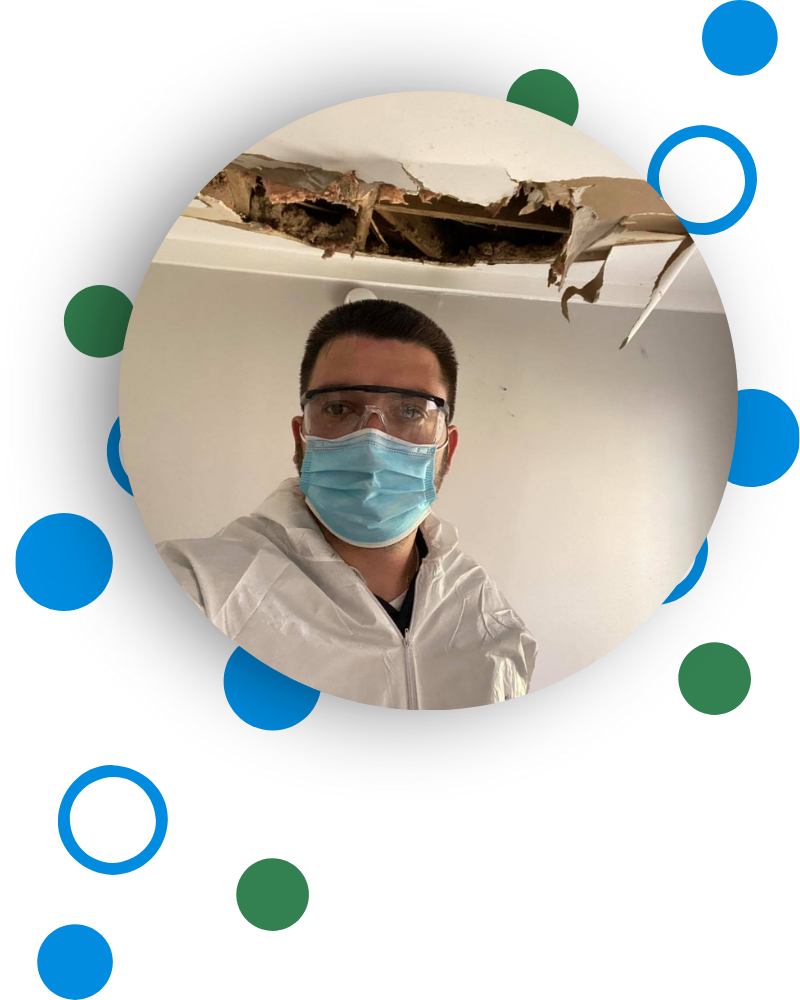
A water stain spreading across your ceiling — or a damp, musty attic — is one of the easiest problems to underestimate. The leak is usually somewhere you can’t see, the damage is often older than it looks, and by the time the ceiling is sagging or dripping, mold may already be forming above it. Here is how to recognize ceiling and attic water damage, what to do in the first hours, and when it’s time to stop guessing and call a professional in Louisville, KY.

Signs of Ceiling Water Damage

Most ceiling leaks announce themselves long before the ceiling actually fails. Watch for:

  • Brown or yellow rings and watermarks. Discolored rings overhead are the classic sign water has been sitting there — often for a while.
  • Bubbling, peeling, or cracking paint. When moisture gets behind the paint, it lifts and blisters.
  • A sagging or bulging ceiling. Drywall that is drooping or “pillowing” is holding water. This is the urgent one — a saturated ceiling can come down without warning.
  • Active drips, or water tracking along a light fixture. Water follows the path of least resistance, so it often shows up at a can light, vent, or seam — not directly under the leak.
  • A damp or musty smell in an upstairs room with no obvious source.

When is it an emergency? If the ceiling is sagging, bulging, or dripping near electrical fixtures, treat it as one. Keep people and pets out of the room and call for help right away — that ceiling is one heavy patch of drywall away from collapsing.

Signs of Water Damage in Your Attic

Attics are the most dangerous place for water damage because no one looks at them — a slow leak can hide for weeks or months. Next time you’re up there (or have someone check), look for:

  • Matted, dark, or compressed insulation. Wet insulation clumps and stops working; it’s often the first sign.
  • Water stains or streaks on the underside of the roof deck or rafters.
  • Damp, spongy, or discolored wood, or a sheen of frost/condensation in colder months.
  • Black or green mold spotting on the rafters, sheathing, or insulation.
  • A musty, earthy smell the moment you open the attic hatch.

Roof Leak, Plumbing, or Condensation? Finding the Real Source

A stain on the ceiling tells you there’s water — not where it’s coming from. The three usual culprits are:

  • A roof leak — damaged shingles, flashing around a chimney or vent, or ice damming in winter. These tend to worsen during or right after rain.
  • A plumbing leak — a supply line, drain, or a second-floor bathroom above the stain. These often leak steadily regardless of weather.
  • HVAC or condensation — a sweating air-conditioning line or duct in the attic, common in Louisville’s humid summers.

Pinpointing the source matters, because drying the ceiling does nothing if the water keeps coming. When we respond, we use moisture meters and thermal imaging to trace the water back to where it’s actually entering — behind the drywall, under the insulation, and above the ceiling — instead of guessing.

What to Do in the First Hours

Acting fast can be the difference between drying the ceiling and replacing it. While you wait for a professional:

  • Get people and valuables out of the area beneath the damage.
  • Put down a bucket and towels to catch active drips and protect your floor.
  • If the ceiling is bulging with trapped water, the safest move is to let a professional relieve it. If you must act, do it carefully with a bucket below — a sudden release can bring the whole section down.
  • Cut power to the affected area at the breaker if water is anywhere near lights or outlets.
  • Don’t paint over or patch the stain to hide it — that traps moisture and lets mold grow behind a fresh coat.
  • Don’t ignore it because it “dried up.” A stain that stops growing isn’t fixed; the source is just between cycles.

For a full step-by-step, see our guide on what to do in the first 24 hours after water damage.

How Long After a Leak Does Water Damage Show — and When Mold Starts

Sometimes you’ll see a stain within hours; other times a slow leak hides above the ceiling or in the attic for weeks before it ever shows. That delay is exactly why attic and ceiling leaks are so often “old” by the time they’re discovered — and old water means mold.

The rule we live by in the field: you generally have 24 to 48 hours from the moment water hits before mold can begin to grow. After that, the risk climbs fast. If clean water from a pipe has gone unattended for three days, we automatically treat it as a Category 3 loss — high risk for mold and contamination — even though it started clean. Time turns a simple drying job into a removal-and-remediation job. If you’re already seeing or smelling mold, you’ll want professional mold removal as part of the work. (Not sure how old your damage is? Here’s how to tell if water damage is new or old.)

What Ceiling & Attic Water Damage Means for Your Insurance Claim

This is where it really counts. Insurance generally covers sudden, accidental damage — a pipe that bursts or an appliance that fails right now. It typically does not cover gradual, maintenance-related damage, like a roof that’s been slowly leaking for months. (Every policy is different, so always confirm with your provider.)

A ceiling leak is easy to misjudge because the damage is hidden until it shows. The best thing you can do is document everything before the ceiling is opened up — photos of the stain, the source, and the date you noticed it. When we respond, we record moisture readings, thermal images, and photos so your claim is backed by evidence, not guesswork.

Why Hire a Professional for Ceiling & Attic Water Damage

A ceiling stain is the visible 10% of the problem. The other 90% — soaked insulation, wet framing, trapped moisture in the wall cavity — is what causes mold, sagging, and a second repair bill down the road. A professional restoration team will:

  • Find and map the real source with moisture meters and thermal imaging.
  • Extract water and dry the structure — not just the surface — including the cavity above the ceiling and the attic.
  • Identify and contain any mold before it spreads through the attic.
  • Document the loss for your insurance.
  • Make sure it’s truly dry before anything gets closed back up, so new drywall and paint bond correctly and the problem doesn’t come back.

We provide an image report showing all the moisture readings, so you have proof of whether your home is fully dry — not just dry to the touch.

Call Louisville’s Trusted Water Damage Team — 24/7

Rodriguez Cleaning & Restoration has been Louisville’s IICRC-certified, family-owned water damage team since 2012, backed by 671+ five-star reviews and a 100% money-back guarantee. We handle the whole job — from emergency water extraction and complete structural drying to full water damage restoration in Louisville, KY.

Got a stained, sagging, or leaking ceiling — or a wet attic? Call us 24/7 at (502) 365-6779 for a free on-site assessment and image report — we’ll be there within the hour.

Frequently Asked Questions

How long after a leak does water damage show on a ceiling?
It varies. A bad leak can stain a ceiling within hours, while a slow roof or attic leak can hide for weeks before any mark appears. Because the source is usually out of sight, ceiling damage is often older than it looks — which is why mold is a real risk by the time it shows.

Is a sagging ceiling an emergency?
Yes. A sagging or bulging ceiling is holding water and can collapse without warning. Keep people and pets out of the room, cut power to the area if water is near fixtures, and call a professional right away.

Can a water-stained ceiling be saved, or does it have to be replaced?
If it’s caught early and fully dried, the ceiling can often be saved. If it’s been wet for days, is sagging, or has mold above it, the affected drywall usually needs to come out. The only way to know is to measure the moisture, not judge by appearance.

Should I just paint over the water stain?
No. Painting over a stain traps moisture and lets mold grow behind the fresh coat. Find and fix the source, dry the area completely, then refinish.

Do you fix the leak too, or just the water damage?
We focus on water damage mitigation, drying, and mold — and we help you identify the source so the right repair (roofer, plumber, HVAC) gets it stopped. Call us and we’ll walk you through it.

How Much Does Sewage Cleanup Cost in Louisville, KY?

A sewage backup is one of the most serious — and most expensive — problems a Louisville home can face. Here is what cleanup actually costs, what drives the price, and what the process involves so there are no surprises.

Dealing with a sewage backup right now? Call (502) 365-6779 for 24/7 emergency response.

How Much Does Sewage Cleanup Cost in Louisville?

Most sewage backup cleanup and restoration jobs in Louisville run $3,000 to $6,000. Sewage falls in the same cost range as major water damage restoration — the price is mostly equipment rental, labor, and intensive cleaning and sanitizing. The difference is that sewage almost always requires removing contaminated materials and rebuilding them, so these jobs typically involve more repairs and a longer overall restoration timeline.

What Affects the Cost

  • The size of the affected area
  • How much porous material must be removed (the IICRC requires porous materials contaminated by sewage to be removed completely)
  • Structural drying with air movers and dehumidifiers
  • Air scrubbing — sewage releases airborne contamination, so cleaning the air is part of the job
  • The amount of repair and rebuild needed afterward
  • The category and severity of contamination

Most Common Causes of Sewage Backups in Louisville

  • Drain backups from clogs — water backing out of regular drains, often from tree-root intrusion in the line
  • Toilet backups — very common, especially in basements
  • Failure of toilet ejector/pump systems — pumps attached to basement toilets stop working and back up

Our Sewage Cleanup & Restoration Process

  1. Inspection. We assess the full scope of the contamination.
  2. Removal of contaminated materials. Most materials beyond the basic structure have to go — any porous material is removed completely per IICRC standards. We handle all of it.
  3. Cleaning & sanitizing. We clean and sanitize everything thoroughly using truck-mounted, commercial-grade equipment and very hot water to disinfect properly.
  4. Structural drying. We set air movers and dehumidifiers to dry the structure completely.
  5. Air scrubbing. Because sewage releases significant airborne contamination, we run air scrubbers to clean the air — highly recommended and included.
  6. Repairs & restoration. We rebuild what was removed so your home is whole again.

Trained, Certified & Detail-Focused

All of our technicians are trained and certified to handle sewage cleanup safely. We are especially meticulous when it comes to structural cleaning, because doing it right is what protects your family’s health.

Does Insurance Cover Sewage Cleanup?

Many homeowner insurance policies cover sewage backup, often through a water-backup endorsement. We document every stage and work directly with your insurer. Learn more on our emergency sewage cleanup in Louisville, KY page.

Rodriguez Cleaning & Restoration offers 24/7 sewage cleanup and biohazard restoration in Louisville, KY. Call (502) 365-6779 or request help now.

Sewage Cleanup Cost FAQs

How much does sewage cleanup cost in Louisville?
Most jobs run $3,000–$6,000, depending on the affected area, how much material must be removed, and the repairs needed.

Why does sewage cleanup cost more than water damage?
The cleanup itself is similar, but sewage requires removing and rebuilding contaminated porous materials and extra sanitizing/air scrubbing, which adds repairs and time.

What causes sewage backups?
Most often drain clogs (including tree roots), toilet backups, and failed basement toilet ejector pumps.

Do you remove contaminated materials?
Yes. Porous materials contaminated by sewage are removed completely per IICRC standards, then we clean, sanitize, dry, and air-scrub.

Does insurance cover sewage backup?
Often yes, via a water-backup endorsement. We document the damage and coordinate the claim with your insurer.

More than a sewage backup? Sewage is a form of black water damage. Rodriguez Cleaning and Restoration also provides professional water damage restoration in Louisville, KY. Call (502) 365-6779 for 24 hour emergency service.

How Much Does Air Duct Cleaning Cost in Louisville, KY? (2026 Pricing Guide)

Wondering what air duct cleaning costs in Louisville? Here is straightforward, real pricing — no gimmicky “$99 whole-home” bait. Rodriguez Cleaning & Restoration prices by the number of vents, so your quote reflects the actual work your home needs.

Want a quick quote? Tell us your vent count over the phone at (502) 365-6779, or request an estimate. When our technician arrives, they double-count every vent with you so you are always priced correctly — no surprises.

How Much Does Air Duct Cleaning Cost in Louisville, KY?

Air duct cleaning starts at a $429 minimum, and most Louisville homes land between $500 and $1,000 depending on the number of vents and any add-ons. Here is our full pricing:

Standard Service Area (within 25 miles)

Number of vents Price
Up to 10 vents $429
11–15 vents $579
16–20 vents $739
Each additional vent $37

Extended Service Area (25–35 miles)

Number of vents Price
Up to 10 vents $509
11–15 vents $659
16–20 vents $819
Each additional vent $37

Add-Ons

Add-on Price
Antimicrobial application $9 per vent
Dryer vent cleaning $100
Additional furnace $160
Painted vent covers $6 each
High ceiling / tall ladder needed $110

Homes with more than four ceiling vents require a second technician (an additional $75) so the job is done safely and efficiently.

What’s Included in Every Air Duct Cleaning

  • Furnace cleaning — we remove the bottom panel and clean the furnace and the main trunk line, not just the vents
  • All supply and return vents, cleaned one room at a time so nothing is missed
  • A walkthrough vent count with you before we start

How We Clean Your Air Ducts

We use powerful compressed air — about 175 PSI — to blast built-up dust, debris, and allergens loose from inside each vent. The debris is captured in a collection box and pulled out to our truck through a vacuum hose, so it leaves your home completely instead of scattering into the air. It is powerful and fully contained.

A Couple Things to Know Before We Arrive

  • Painted-over vent covers. We carefully remove every vent cover to avoid cracking the drywall. If your covers have been painted over, removing them can crack the surrounding drywall — we cannot be responsible for paint-sealed covers, and painted covers carry a $6-each charge.
  • Have a fresh air filter ready. The cleaning process kicks up dust and your filter usually catches a lot of it, so we recommend having a new filter on hand. We will gladly swap it in when we finish.

Why Louisville Homeowners Choose Rodriguez

Our technicians are trained and certified, our pricing is transparent and based on your actual vent count, and furnace cleaning is included — not an upsell. You get a thorough, contained clean and an honest price.

Ready for cleaner air? Rodriguez Cleaning & Restoration provides professional air duct cleaning in Louisville, KY. Call (502) 365-6779 or request your free estimate.

Air Duct Cleaning Cost FAQs

How much does air duct cleaning cost in Louisville, KY?
It starts at a $429 minimum. Most homes run $500–$1,000 depending on vent count and add-ons like antimicrobial treatment or dryer-vent cleaning.

How do you price air duct cleaning?
By the number of vents. We can give you a quote over the phone from your vent count, and our technician double-counts every vent on arrival so the price is accurate.

Is furnace cleaning included?
Yes — we remove the bottom panel and clean the furnace and main trunk line as part of the service.

How do you actually clean the ducts?
With about 175 PSI of compressed air that blasts debris loose, captured in a collection box and vacuumed out to our truck so it leaves your home entirely.

Do you clean dryer vents?
Yes — dryer vent cleaning is a $100 add-on.

What if my vent covers are painted over?
We remove them carefully, but painted covers can crack the drywall when removed (we are not responsible for paint-sealed covers) and are $6 each.

Oriental Rug Cleaning Louisville KY

Rug Cleaning Cost in Louisville, KY (2026 Pricing Guide)

Wondering what it costs to get your rug cleaned in Louisville? Pricing comes down to two things: which cleaning method your rug needs and its size. In-shop deep cleaning — the method recommended for area rugs — starts at about $4.00 per square foot, while lighter on-site surface cleaning runs about $1.50 per square foot. Here is the full breakdown so you know exactly what you are paying for.

Rug cleaning cost in Louisville, KY — in-shop deep cleaning process for area and oriental rugs

The figures below are typical Louisville prices to help you plan. Every rug is different — we provide a free, exact quote before any work begins.

The Two Ways to Clean a Rug (and What Each Costs)

1. Surface cleaning (on-site) — about $1.50/sq ft. A controlled steam/surface clean done in your home. We lower the pressure and temperature to prevent color bleeding, regulate the equipment, and protect surrounding wood floors. Good for lightly soiled rugs and quick refreshes.

2. In-shop deep cleaning — from $4.00/sq ft. This is what we recommend for area rugs, because a rug can only be fully, safely cleaned at our rug plant. It is a complete submersion wash, not a surface pass.

Our In-Shop Rug Cleaning Process

Here is exactly what your rug goes through — and why in-shop cleaning costs more than a surface clean:

  1. Inspection to confirm the rug is colorfast and safe to wet-clean.
  2. Dusting to remove dry soil embedded deep in the fibers.
  3. Wet wash — front and back scrubbed and flushed with a wool-safe product.
  4. Rug centrifuge to extract the water, followed by a final rinse.
  5. Hang to dry in a controlled environment.
  6. Second inspection and spot cleaning if needed, then dried again.
  7. Wrapped in paper for return, to prevent condensation or damage.

Rug Cleaning Cost by Size

In-shop deep cleaning for wool, cotton, and synthetic rugs is about $4.00 per square foot. For the most common rug sizes that works out to roughly:

5′ x 7′ rug (35 sq ft) ~$140
8′ x 10′ rug (80 sq ft) ~$320
9′ x 12′ rug (108 sq ft) ~$432

More delicate fibers — sisal, viscose, and silk — carry an additional per-square-foot charge because they require extra care. Wool, silk, and oriental rugs go through the same thorough process; synthetic rugs clean a little faster because the fibers are stronger, but the price is about the same since the process is the same.

What’s Included vs. Add-Ons

Your base in-shop price (about $4/sq ft for wool) includes dusting, washing, drying, and a fresh fragrance. Optional add-ons:

Odor & pet-urine decontamination (deodorizer) +$2.50/sq ft — 100% odor-removal guarantee
Rug pad (prevents slipping & floor scratches) +$2.50/sq ft
Moth treatment +$2.50/sq ft
Fiber protector (3-year warranty — free spot cleaning if you spill) Available — ask for pricing

On pet urine and odor, our deodorizer treatment flushes and neutralizes the urine and is backed by a 100% odor-removal guarantee — if it needs another pass, we redo it at no charge.

Pickup & Delivery

Pricing usually includes free pickup and delivery. For a large rug (like an 8×10) that needs a second person, there is a one-time $75 fee that also covers moving furniture in the first room. Each additional room where we move furniture is $50.

What Drives the Price Up

Your total comes down to the combination of services your rug needs and how much contamination is present. A clean, lightly used wool rug is at the base rate; a pet-soiled silk rug needing deodorizing and a pad will be higher.

How Long Does It Take?

Typical turnaround is about two weeks from the day we pick up your rug to the day we call to schedule its return. Add-ons like odor treatment can extend that slightly.

Why Professional Rug Cleaning Is Worth It

This is not a DIY job. You cannot flush a rug or dry it the way a rug plant can, and without the right training it is easy to cause color bleeding, shrinkage, or permanent damage. Professional cleaning protects the rug and its value.

Get a Free Rug Cleaning Quote in Louisville

Rodriguez Cleaning & Restoration has 600+ five-star reviews, the training, proven systems, technology, and wool-safe products to clean and restore your rugs safely — without damaging them. Explore our area rug & oriental rug cleaning service, or see why we are rated the best area rug cleaner in Louisville.

Want an exact price for your rug? Call us at (502) 365-6779 or request your free quote — pickup and delivery included.

Ready to book? Rodriguez Cleaning & Restoration provides oriental & area rug cleaning in Louisville, KY backed by 600+ five-star reviews. Call (502) 365-6779 or request a free quote today.
Call now (502) 365-6779 Book online Cleaning service