


Loss type: burst supply line. Water category: Category 3. Area affected: roughly 900 square feet of finished basement. Location: Louisville, Kentucky.
A pipe let go in a Louisville basement and ran for more than three days before anyone noticed. By the time we got the call, the water had moved out of the laundry room, down the hallway, through the bathroom and the bedroom, and across the entire finished basement living area.
This is what that job actually looked like, start to finish. The homeowner details are left out on purpose. The work is not.
What We Walked Into
The homeowner’s own photos tell the first part of the story. Water sitting on top of luxury vinyl plank, seams starting to lift, and a floor that looked dry in places and was soaked underneath.
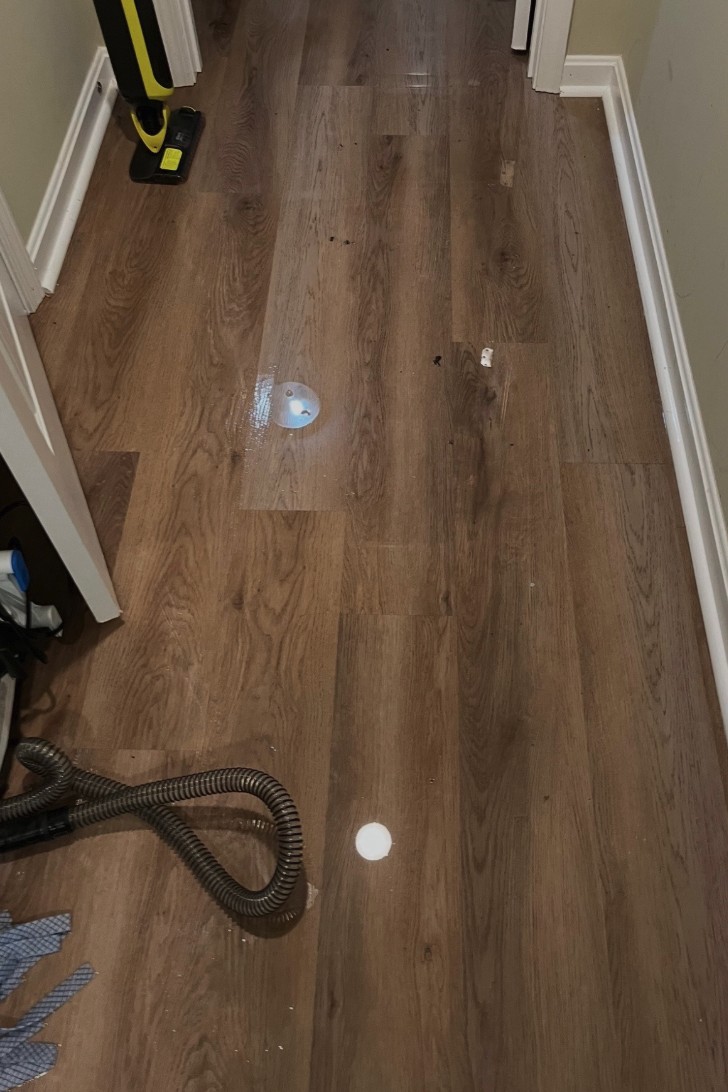
That is the trap with plank flooring over a slab. The surface sheds water, so the room looks survivable, while the pad, the slab and the bottom of the walls quietly hold it. Moisture meters, not eyes, are what tell you how far it actually went.
Why Three Days Turns Clean Water Into Category 3
Water from a supply line starts out clean. It does not stay clean. Standing water picks up whatever it touches, feeds bacteria, and after roughly 48 to 72 hours in a warm basement it is no longer a clean water loss. The IICRC calls that Category 3, and it changes how the entire job has to be handled.
Category 3 means porous materials that got wet come out instead of being dried in place. It means HEPA filtration and negative air. It means full personal protective equipment, respirators with HEPA cartridges, heavy duty gloves, and decontamination of every piece of equipment before it leaves the house.
This loss was classified Category 3 for exactly that reason. Not because of what broke, but because of how long it ran. If you want the full breakdown, we wrote a separate guide on the three categories of water damage.
Every Room We Documented
Before anything was touched, every affected room was scanned, measured and photographed.
- Basement living area, 668 square feet
- Bedroom, 153 square feet
- Laundry room, 50 square feet
- Bathroom, 21 square feet
- The hallway connecting all of them
- Upstairs living area, 1,175 square feet, documented for the file
Roughly 900 square feet of that went into the drying chamber. The upstairs was scanned as well so the insurance file showed the whole home, not only the wet part of it.
Every room got its own floor plan, its own 3D scan, and its own moisture readings with a written dry goal. That documentation is what makes an estimate hold up when an adjuster reviews it weeks later.
What Came Out, and Why
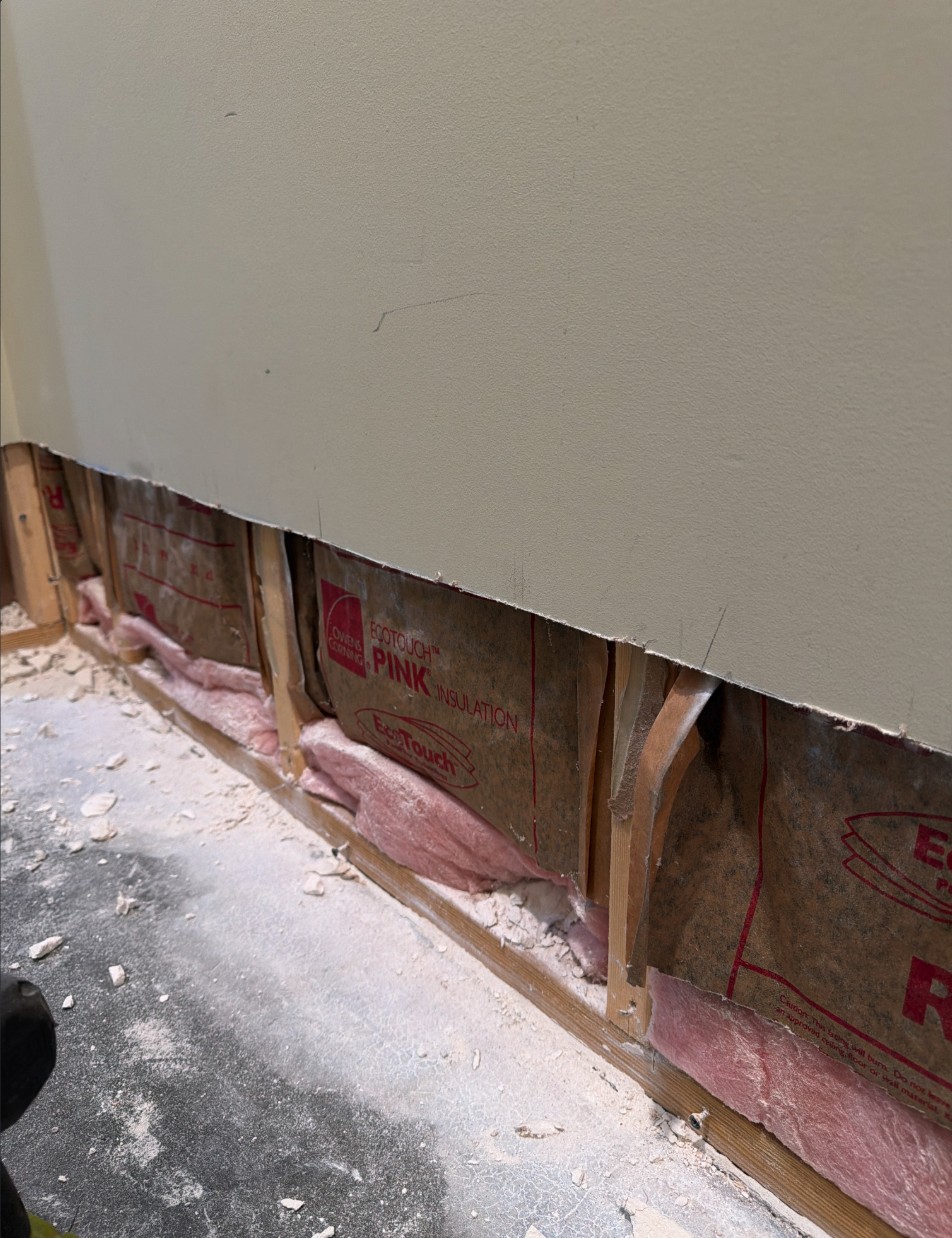
Wet flooring and pad were removed down to the slab. Baseboard came off. The drywall was flood cut above the water line so we could reach the insulation and the framing behind it, because insulation that sat in Category 3 water for three days does not dry. It has to go.
All of it, between one and three tons of material, went into a twelve yard dumpster and off the property.
People ask why we cut the wall instead of just pointing fans at it. The answer is in that photo. The painted face of the drywall was still standing while the insulation behind it was soaked. Drying the side you can see does nothing for the side you cannot.
How We Dried It
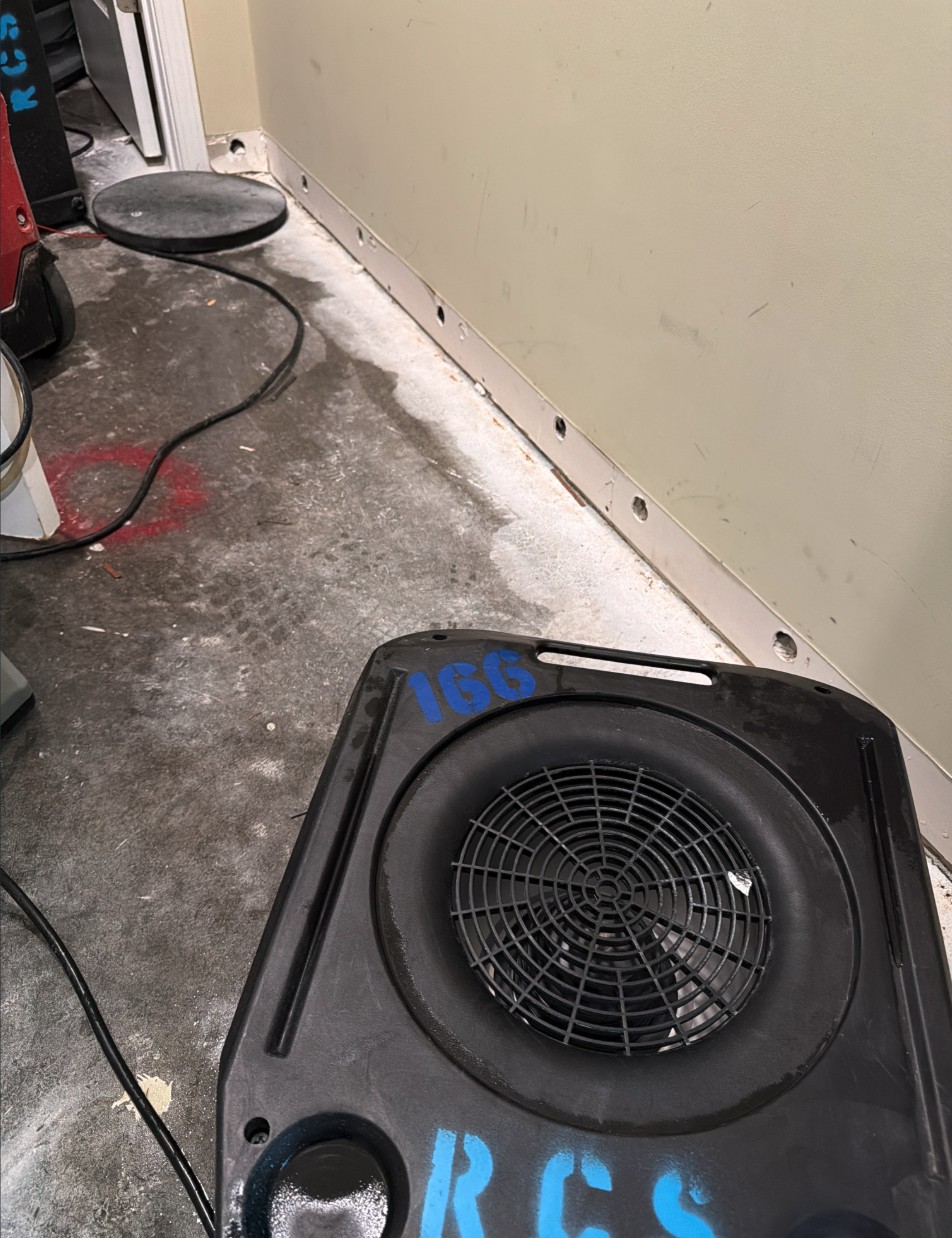
With the wet materials out, the basement was set up as a single drying chamber. Air movers pushed air across the exposed slab and into the open wall cavities while dehumidification pulled the moisture back out of the air. This is the part most people picture when they think of structural drying and dehumidification, and it is the part that decides whether mold shows up in six weeks.
Readings were checked room by room against the dry goal set on day one. Equipment does not come out because the calendar says so. It comes out when the numbers say the structure is dry.
How the Insurance Side Was Handled
The homeowner did not have to build the claim file. We did.
The estimate was written in Xactimate, the same platform the carriers use, and billed to the insurance company directly. The scans, floor plans, photos and moisture logs went with it. We work with most carriers, including State Farm, Travelers, Kentucky Farm Bureau and Liberty Mutual.
This is where a lot of water damage jobs fall apart for homeowners. The water gets removed, and then they are on their own trying to explain to an adjuster why a wall had to be opened. Documentation done properly on day one is what prevents that conversation from ever happening.
Where It Ended
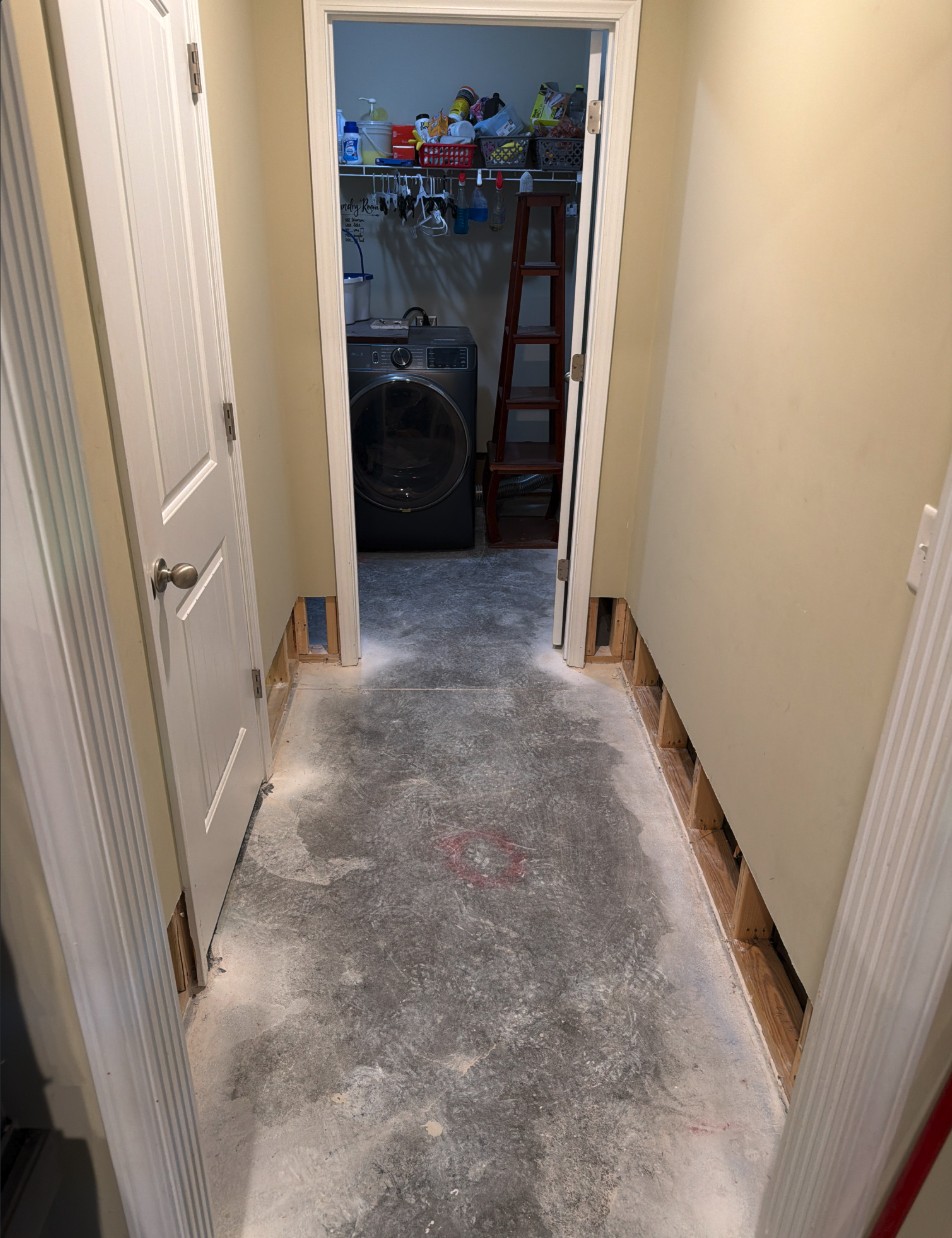
Flooring removed, slab exposed and dry, walls opened and dried, contaminated material gone, and meter readings to prove it. Ready for rebuild.
That last part is worth saying plainly. We do not stop at drying. We are a full restoration company, so the same team that dries the house is the team that puts it back together.
What To Do If a Pipe Breaks in Your Louisville Home
- Shut the water off at the main. Know where that valve is before you need it.
- Stay clear of electrical hazards. Do not enter standing water or approach wet outlets or a panel. Have the utility or a qualified electrician address electrical safety before entry.
- Photograph everything before you move it. Your phone is the cheapest documentation you will ever get.
- Do not wait to see if it dries on its own. The three day delay in this job is the entire reason it became a Category 3 loss.
- Call a restoration company, not only a plumber. The plumber stops the leak. Somebody still has to deal with what the water did.
More detail on the process is on our burst pipe cleanup page, and if the water ended up in a basement like this one, see flooded basement cleanup.
Common Questions About Burst Pipe Damage
How fast do I really need to act?
Immediately. Clean water can degrade into contaminated water in a couple of days, and every hour it sits is more material that has to be removed instead of dried. A response measured in hours costs a fraction of a response measured in days.
Will my insurance cover a burst pipe?
A sudden accidental discharge is usually treated differently than long term seepage, but coverage is your carrier’s decision and every policy is written differently. We are a restoration company, not your insurer. What we control is documenting the loss thoroughly enough that the decision is made on facts.
What does this kind of job cost in Louisville?
Our minimum charge for water damage, including drying equipment, is $1,500. What a specific job runs depends on how much material is affected, the water category, and how long the equipment has to stay. An initial rough mitigation estimate may be available. We prepare the final mitigation estimate after mitigation is complete, then review repairs with the adjuster before agreeing on repair scope and pricing with your authorization. Read our water damage insurance process.
Do you handle the repairs, or just the drying?
Both. We are a full water damage restoration company in Louisville, from the first extraction through the rebuild.
Water in Your Basement Right Now?
Do not wait until morning. A live person answers our phone 24 hours a day, seven days a week, and we are on site within one hour.
Call (502) 365-6779. Calls only, no texting. 741 Google reviews with a 4.9 overall rating (verified September 2026), IICRC certified, and insurance billed directly.
