Louisville’s Trusted Structural Drying & Dehumidification Experts
Structural drying begins after visible water is gone. It is the measured drying phase of professional water damage restoration in Louisville. Framing, concrete, plaster, hardwood, and subfloors can hold moisture deep below the surface, and each material releases it at a different rate. When standing water remains, emergency water extraction comes first so the controlled drying process can begin.
Our drying technicians apply the principles of psychrometry to manage temperature, humidity, and evaporation as one controlled system. Equipment is adjusted as readings change, and unaffected materials provide the comparison for the final dry goal. This measured approach protects against stopping too early, overdrying sensitive materials, or rebuilding over moisture that can later cause warping, rot, and mold.
Filing a Water Damage Insurance Claim? We Bill Your Insurance Company Directly So You Don’t Have To!
Moisture readings and equipment records help document the drying portion of your mitigation work. After mitigation is complete, we prepare the final Xactimate estimate and then coordinate the repair walkthrough with your adjuster. Direct insurance billing is available, but coverage and claim payment remain insurer decisions. See our water damage insurance process for how drying, billing, and repairs fit together.






Testimonials
What Customers Say About Working with Rodriguez

When your home is full of hidden moisture, Louisville homeowners call Rodriguez Cleaning and Restoration because we dry it properly and prove it with daily readings, not guesswork. We take pride in delivering top-notch structural drying when you need it most, and our commitment to quality and honest service has earned us glowing reviews. Click below to read what our customers have to say.

Our Process
Rodriguez Restoration 8 Steps for Structural Drying & Dehumidification in Louisville, KY
Structural drying starts with measurements and ends with documented progress toward a drying goal. Air movement, dehumidification, and monitoring work together to address moisture left in the structure after extraction and necessary cleanup.
Our drying phase is part of mitigation. We finish that work and its final estimate before the adjuster repair walkthrough and agreement on rebuilding.
Tell us where the water came from, how long materials were wet, and whether standing water remains. If bulk water is still present, water extraction is addressed before the measured drying phase. Necessary contaminated-material cleanup also comes before drying the remaining structure.
We assess walls, subfloors, framing, and other affected materials with moisture meters and thermal imaging. This establishes the starting condition and helps identify concealed dampness beyond what can be seen or felt at the surface.
We explain the equipment, access, and monitoring proposed for your home before you authorize mitigation. A rough initial mitigation estimate can help outline the expected work; the final mitigation estimate is prepared after completion from the documented services.
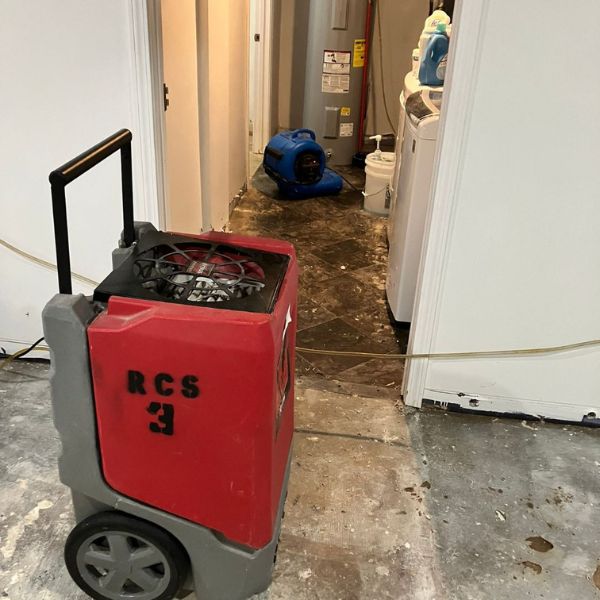
Commercial air movers support evaporation while dehumidifiers remove moisture from the air. Equipment placement and the drying area are planned around the affected materials and site conditions rather than a fixed number of machines for every room.
We take moisture and humidity readings during the drying phase and track progress. A dry-looking surface does not tell us enough about the subfloor or framing underneath. Tell the crew about continuing leaks, new damp spots, or equipment concerns.
Readings help us decide whether to reposition equipment or revise access and drying work. Different materials dry at different rates, so the plan follows measured progress rather than promising that every property will be dry after the same number of days.
We compare the affected materials with the drying goal before ending the drying phase. After mitigation is complete, we prepare its final estimate with supporting moisture records and photos. This documentation is separate from the later repair estimate.
Once mitigation is complete, we meet your adjuster at the home for the repair walkthrough. With your authorization, we review and negotiate restoration scope and pricing. Repairs begin after agreement and your authorization. See the mitigation and repair insurance process.


Common Situations That Require Structural Drying in Louisville, KY
Drying plans depend on the materials affected, their condition, and how moisture can be accessed and measured. We explain what can be dried and what may need removal rather than treating every wet surface the same way.
Subfloors and floor cavities. Water beneath a finished floor may need access before the underlying materials can be assessed and dried. Surface appearance alone does not show the condition of the assembly.
Drywall and wall cavities. We assess wet finishes, insulation, and framing. Drying in place is considered where appropriate, with removal explained when material condition or contamination requires it.
Wet hardwood flooring. Moisture readings and the floor condition guide the plan. Specialty drying may be appropriate in some situations, but not every wet floor has the same drying classification or can be restored without replacement.
Insulation. The type of insulation, contamination, and condition help determine whether it should be removed. The surrounding cavity also needs assessment and drying.
Concrete and masonry. These materials may retain moisture after visible water has been removed. We account for the affected material and measured conditions when setting the drying goal.

Ceilings and attic framing. Water from above can affect several layers before appearing in the room below. We assess accessible materials once the area is safe and explain any necessary removal and drying.
Crawl spaces. We assess access, the water source, and affected materials before planning removal or dehumidification. An ongoing moisture source must be addressed as part of recovery.
Humidity after water removal. Dehumidification supports material drying by removing moisture from the air. We monitor the structure as well as the air; a comfortable room or a lower humidity reading alone does not confirm that every affected material is ready for repairs.