


When water damage strikes your home, everything feels urgent. You may have a flooded basement, a leaking appliance, or sewage backing up into the house. Most homeowners are stressed, overwhelmed, and trying to make a fast decision.
That is exactly why choosing the right water damage mitigation company matters.
At Rodriguez Cleaning & Restoration, we became serious about water damage mitigation because we saw unscrupulous companies take advantage of homeowners. Some companies would rip out materials that could be saved, or they would set equipment and leave without proper inspection and documentation. Our philosophy is simple: mitigation should be based on inspection, science, documentation, and honest communication. The goal is to protect your home and save as much as can be safely saved.
What Does a Water Damage Mitigation Company Do?
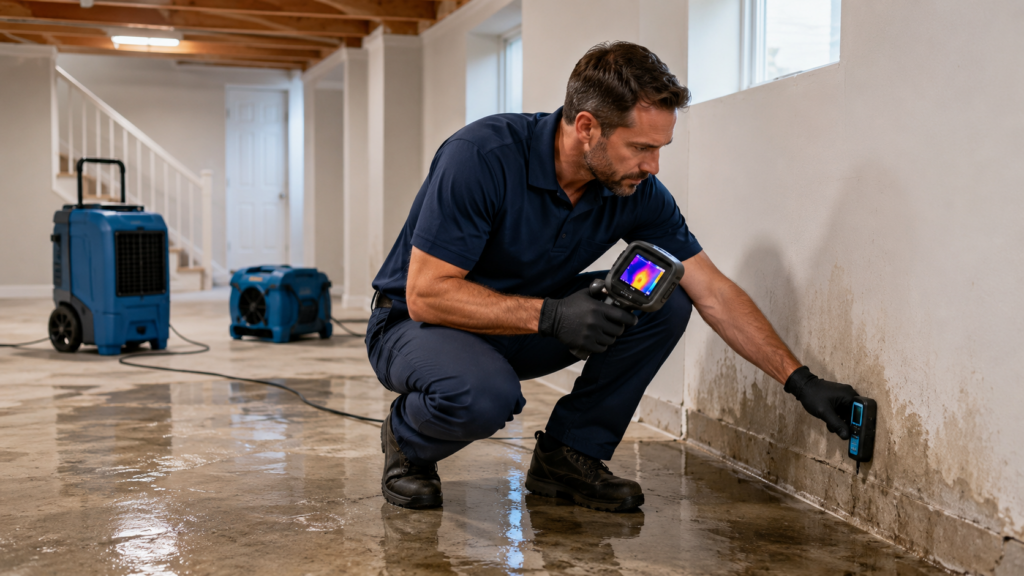
Water mitigation is the emergency process of stopping further damage after water enters your home. It includes water extraction, moisture inspection, removal of unsalvageable materials, cleaning, dehumidification, daily monitoring and final documentation. Some people call this water cleanup, dry‑out, or water restoration, but the goal is the same – remove the water, find hidden moisture, dry the structure properly and prevent mold.
The Best Company Isn’t Always the Biggest
When you search “best water damage mitigation company,” big national franchises often appear first. That doesn’t mean they are the best for you. A great mitigation company explains its process before work begins. They show what is wet and dry, what can be saved, what needs to be removed and why. They don’t scare you into unnecessary demolition or promise they can save everything when they cannot. They balance saving materials with removing what cannot be saved.
Why Proper Drying Is the Secret
Proper drying is not just about placing fans. It is a balance of extraction, air movement, heat and dehumidification. The more moisture you remove through extraction and controlled drying, the more money you may save in repairs and the less downtime you will have. Too many fans without enough dehumidification can push moisture into the air and cause condensation. Too few fans can prolong the drying process. Professional drying uses moisture meters and daily monitoring to ensure your home is actually dry.
What Happens When You Call Rodriguez
Your call starts with a free inspection and assessment. We arrive with moisture meters, thermal cameras and hygrometers to locate all the moisture. We create a moisture map and explain what is wet, how far the water has traveled, what can be saved, what may need to be removed, and give you a rough estimate. If you approve, we extract the water, set up drying equipment, monitor the job daily and document everything for you and your insurance company.
How Do You Know the Home Is Dry?

We establish a baseline by taking moisture readings at the start of the job. We check progress daily and adjust equipment as needed. At the end of the job we take final readings to show that affected materials have reached a dry standard. We document the readings with moisture meters, thermal cameras, hygrometers, photos and moisture maps. This protects your home from mold and gives your insurer the information they need.
Common Mistakes We See
Not doing a proper inspection: Without moisture meters and thermal cameras, hidden moisture can be missed.
Not extracting enough water: Removing standing water quickly makes drying faster and cheaper.
Not coming back daily: Equipment should not be set and forgotten. Conditions change and equipment needs to be adjusted.
Removing too much material: Some companies remove drywall, cabinets or flooring without considering whether they can be dried safely.
Not removing enough material: Others try to save materials that are contaminated or cannot be dried in place, leaving hidden moisture and future problems.
Drying without documentation: Pictures and moisture readings are not optional. They prove what was wet, what was dried and why the work was necessary.
What to Look For Before Hiring
Reviews and reputation: Positive reviews indicate happy clients. Always check a company’s reviews and ask for recommendations.
Experience and certification: Look for IICRC certification and technicians trained in water mitigation and structural drying.
Professional equipment: Moisture meters, thermal cameras, dehumidifiers and air movers should be standard.
Clear communication: The company should explain what is wet, what needs to be done, how long it will take and give you a rough estimate.
Insurance documentation: Ask whether they document moisture readings and use Xactimate or another industry‑standard estimating tool. Proper documentation makes insurance claims easier.
Red Flags
- A company with no reviews or only a few months in business.
- They cannot explain the process or give you an estimate.
- They do not use moisture meters or thermal imaging.
- They do not take photos or moisture readings.
- They remove materials without explaining why.
- They set equipment and disappear without daily monitoring.
Common Water Damage Problems in Louisville
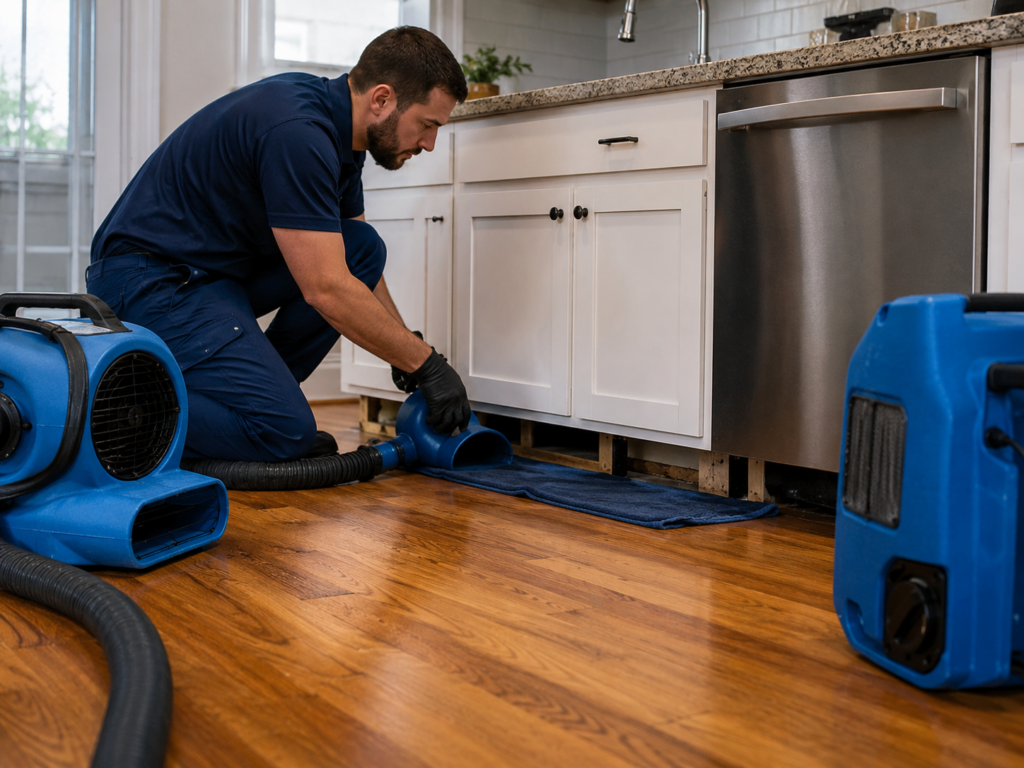
In Louisville we see sump pump failures after heavy rain more than anything else. We also see leaking water heaters, dishwashers and washing machines, sewer backups and high humidity in basements. Finished basements are particularly vulnerable because water can spread through carpet, pad, drywall and flooring. Poor exterior drainage, downspouts that discharge too close to the foundation and clogged sump pits are common contributors.
What Homeowners Misunderstand About Flooring
LVP flooring: Luxury vinyl plank is water‑resistant, but if it floats and water gets underneath it must often be removed so the subfloor can dry. Glue‑down LVP can sometimes be saved.
Carpet and pad: Carpet pad usually needs to be removed. Carpet may sometimes be saved depending on the category of water and how long it was wet.
Drywall and baseboards: Interior drywall without insulation can sometimes be dried in place; exterior walls with insulation may need drywall removed to access and dry the cavity. Baseboards can often be saved, but sometimes break during removal.
Documentation Before You Remove Anything
One of the biggest mistakes homeowners make is ripping out materials before taking pictures and moisture readings. If you remove wet flooring, drywall or contents before documenting the damage, it may be harder for your insurance company to understand what happened. Always document before demolishing, and compare the cost of repairs to your deductible before filing a claim.
Does Insurance Cover Water Damage?
Coverage depends on the source. Sudden and accidental water damage, such as a burst pipe or appliance leak, may be covered. Water backup from a sump pump or sewer line usually requires a water backup endorsement. Flood water that comes from outside or through the ground typically requires a separate flood policy. Always check with your agent.
Examples We See
Sump pump failure: A basement flooded with several inches of water. We extract standing water, remove the pad under the carpet and some drywall on exterior walls to access wet insulation, but save the tile floor and interior drywall. We document everything and the claim is approved because the damage was handled properly.
Leaking dishwasher: A dishwasher leak damages wood floors, cabinets, the ceiling below and carpet in the basement. We dry the wood floors, dry the bottom of the cabinets by removing the kick plate, open the ceiling to dry trapped water, remove wet insulation, and remove the carpet pad while drying the carpet. Again, proper documentation helps the claim go smoothly.
Why Choose Rodriguez Cleaning & Restoration
We are a family‑owned Louisville company, not a national franchise. We invest in training and equipment because we believe in doing water mitigation the right way. When you call us, you can expect:
- Free inspection and assessment
- 24/7 emergency response
- Moisture mapping with thermal cameras and moisture meters
- Water extraction, structural drying and sewage cleanup
- Daily monitoring and equipment adjustments
- Photos, readings and moisture maps for your insurer
- Insurance support with Xactimate estimates
- Clear communication at every step
Final Advice
Before you hire any water damage mitigation company in Louisville, ask if they are certified, what equipment they use, whether they document moisture readings and photos, and how they will communicate with your insurance company. The best company is not the one that removes the most material or sets the most equipment. It is the one that protects your home, documents the loss and dries it properly.
If you have water damage in Louisville, KY, call Rodriguez Cleaning & Restoration at (502) 365‑6779 for emergency water extraction, structural drying and full water mitigation. We are here to help 24/7.
Frequently Asked Questions
Who is the best water damage mitigation company in Louisville?
The best company should be certified, experienced, well reviewed and equipped with moisture meters, thermal cameras and proper drying equipment. Rodriguez Cleaning & Restoration provides emergency water extraction, structural drying, documentation and insurance support.
What is the difference between water mitigation and water restoration?
Water mitigation is the emergency process of stopping further damage by removing water, drying the structure and removing unsalvageable materials. Water restoration refers to the reconstruction after drying, such as replacing drywall, flooring and cabinets.
What should I look for in a water dry‑out company?
Look for good reviews, certifications, proper equipment, daily monitoring and detailed documentation. Ask them to explain what they will do and why.
Does homeowners insurance cover water damage?
It depends on the source. Sudden and accidental leaks may be covered; water backup and flooding usually require separate coverage. Always check with your agent.
How long does drying take?
Most jobs take several days, depending on the amount of water, the materials affected and how quickly mitigation starts. Daily monitoring is essential to know when the structure is dry.
